

Paramaribo, Suriname – Pierre Beranger, 1817
€2.450
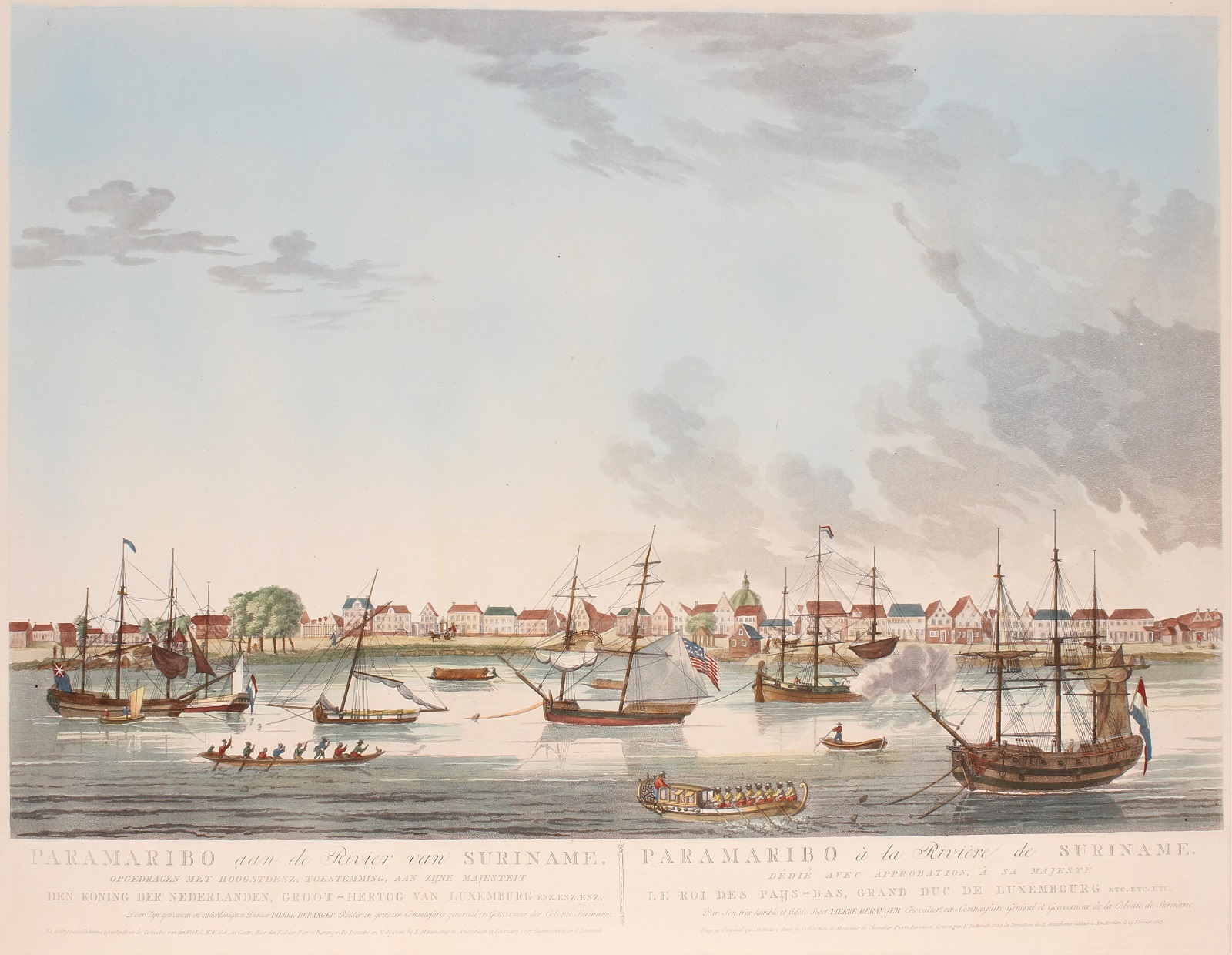
THE ‘WATERKANT’ AT PARAMARIBO
“Paramaribo aan de Rivier van Suriname” aquatint engraved by F. Dieterich after a design by Pierre Beranger, “former Commissioner-General and Governor of the Colony of Suriname,” published by Evert Maaskamp in Amsterdam in 1817. Coloured by a later hand. Size (image): 37.7 × 55.7 cm.
The Waterkant [waterfront] of Paramaribo was the first thing travelers saw as they arrived in Suriname. This is where ships from Europe and the Americas docked and where plantation inhabitants came ashore. For a long time, it was the hub of the city’s economic life. From the earliest days, there was a market where goods and enslaved people were traded. Merchant houses, warehouses, and dockside taverns lined the area. In the 18th century, many plantation owners abandoned their estates to enjoy the luxury of city life. Jewish merchants moved to the city to engage in trade. Many formerly enslaved people also came to the city, often because they had been granted plots of land in exchange for tracking down runaway slaves.
This view of the city, with sailing ships in the foreground flying English, American, and Dutch flags, was published after the Congress of Vienna (1814-1815), where it was agreed that the Netherlands would regain control of the colony of Suriname from Britain. In 1816, Suriname came under the authority of King William I (to whom the print is dedicated). The king governed the colonies by Royal Decrees, which marked the end of the colonists’ autonomy in Suriname.
The depiction of the city likely dates from 1804 – 1805, when Pierre Béranger served as Governor.
Price: Euro 2.450,-