

Lawrence Alma-Tadema (1836–1912), born in the Frisian village of Dronrijp, became one of the most successful artists of the nineteenth century. After his training in Antwerp and a period in Brussels, he settled in London in 1870, where he achieved international acclaim with his refined depictions of Classical Antiquity.
A journey to Italy in 1863–64 marked a turning point in his career. His encounter with Rome and Pompeii led to a lifelong fascination with the ancient world. Alma-Tadema combined archaeological accuracy with an exceptional sensitivity to detail and surface texture, resulting in paintings that offer a vivid and convincing impression of daily life in antiquity.
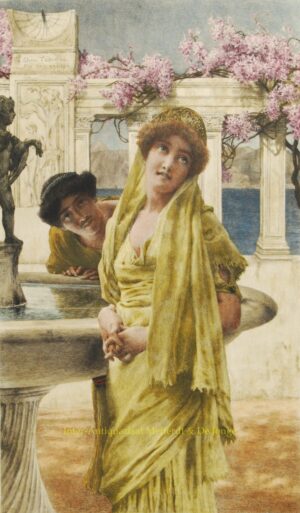
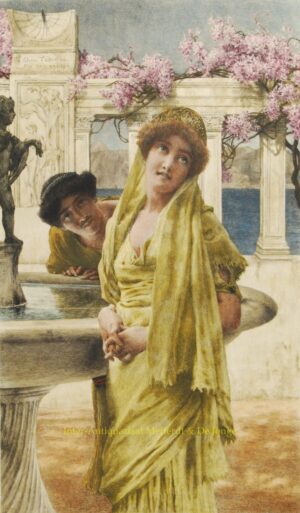
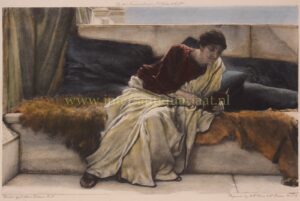
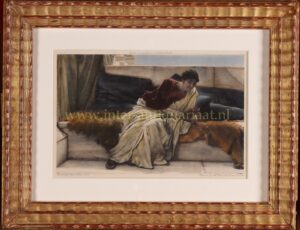
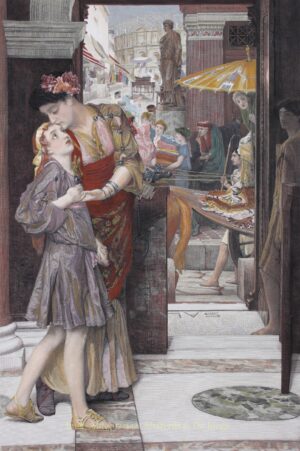
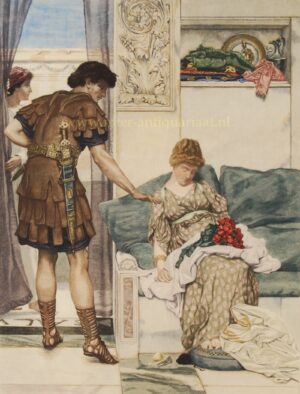
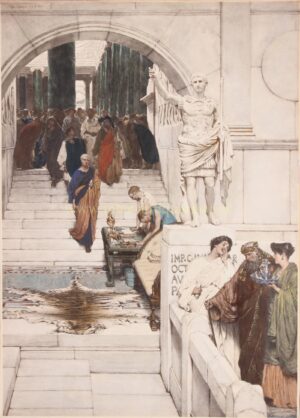
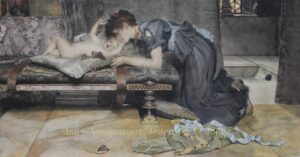
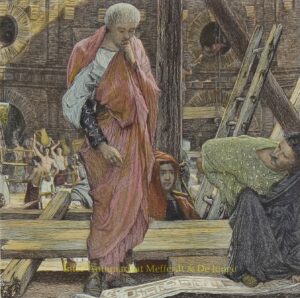
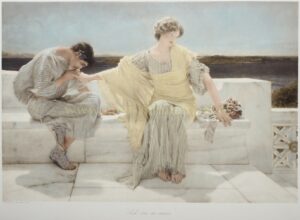
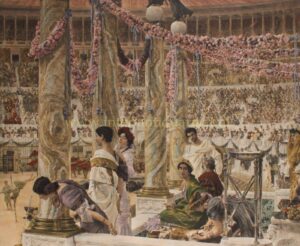
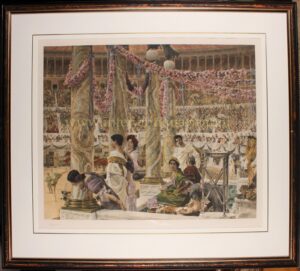
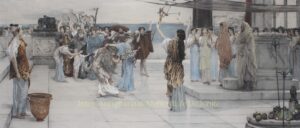

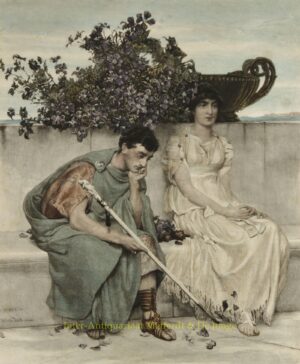
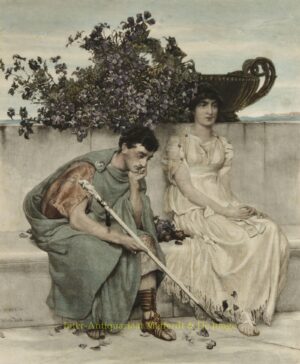
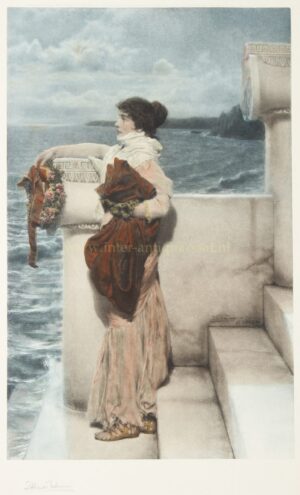
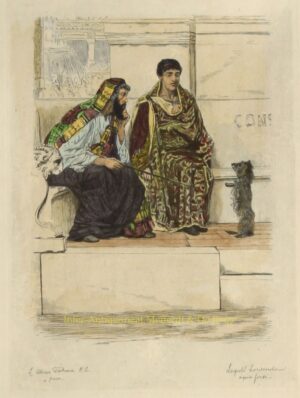
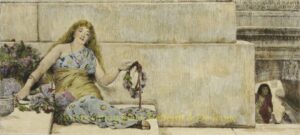
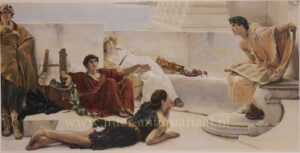
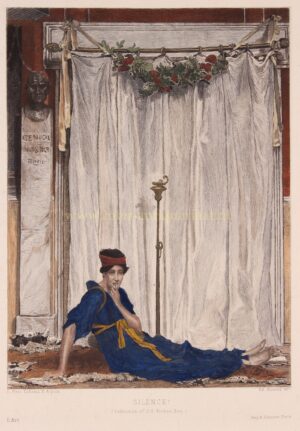


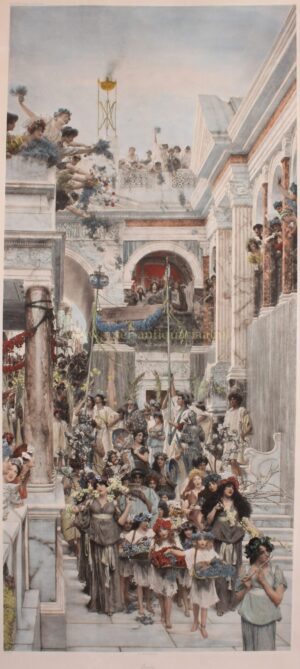


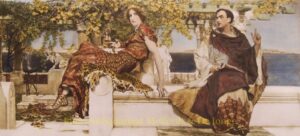
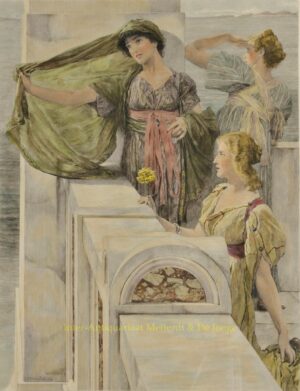
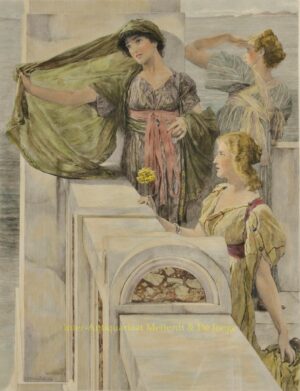
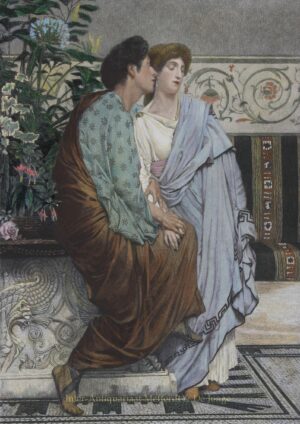
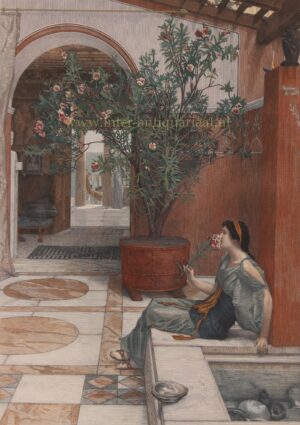
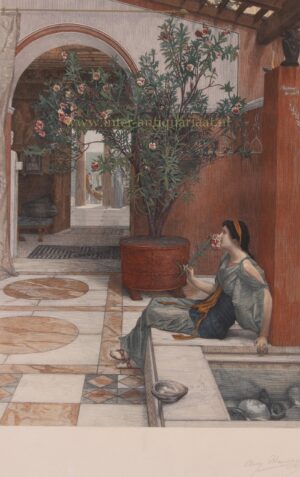


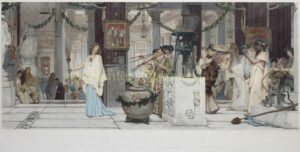
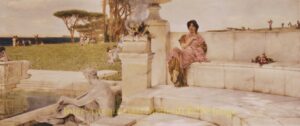
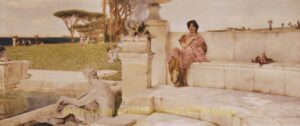
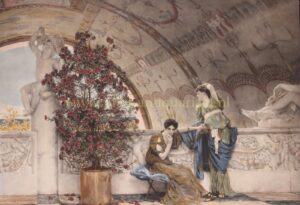
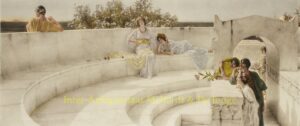

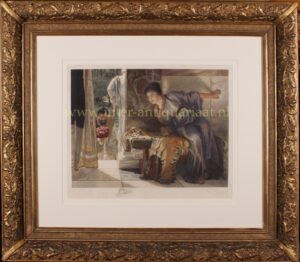
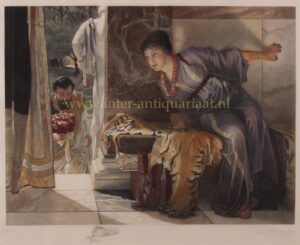
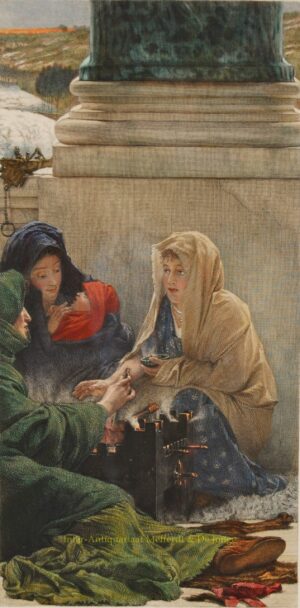

In order to reach a wider audience, high-quality prints were made after his most popular works, initially as steel engravings and later as photogravures. These were done by leading printmakers and publishers and issued in limited numbers, typically ranging from approximately 125 to 800 impressions. The prints were often published in different states, from standard editions to rare artist’s proofs, and in many cases bear both the name of the artist and that of the engraver. The prints by Lawrence Alma-Tadema offered here are not only important witnesses to the nineteenth-century art trade, but also highly sought-after collectors’ items. Alma-Tadema himself recognised that while not everyone could own one of his paintings, an original print offered an accessible alternative—works whose production he closely supervised to ensure their artistic quality.