

Leiden, Utrechtse Veer – Noach van der Meer, 1763
€525
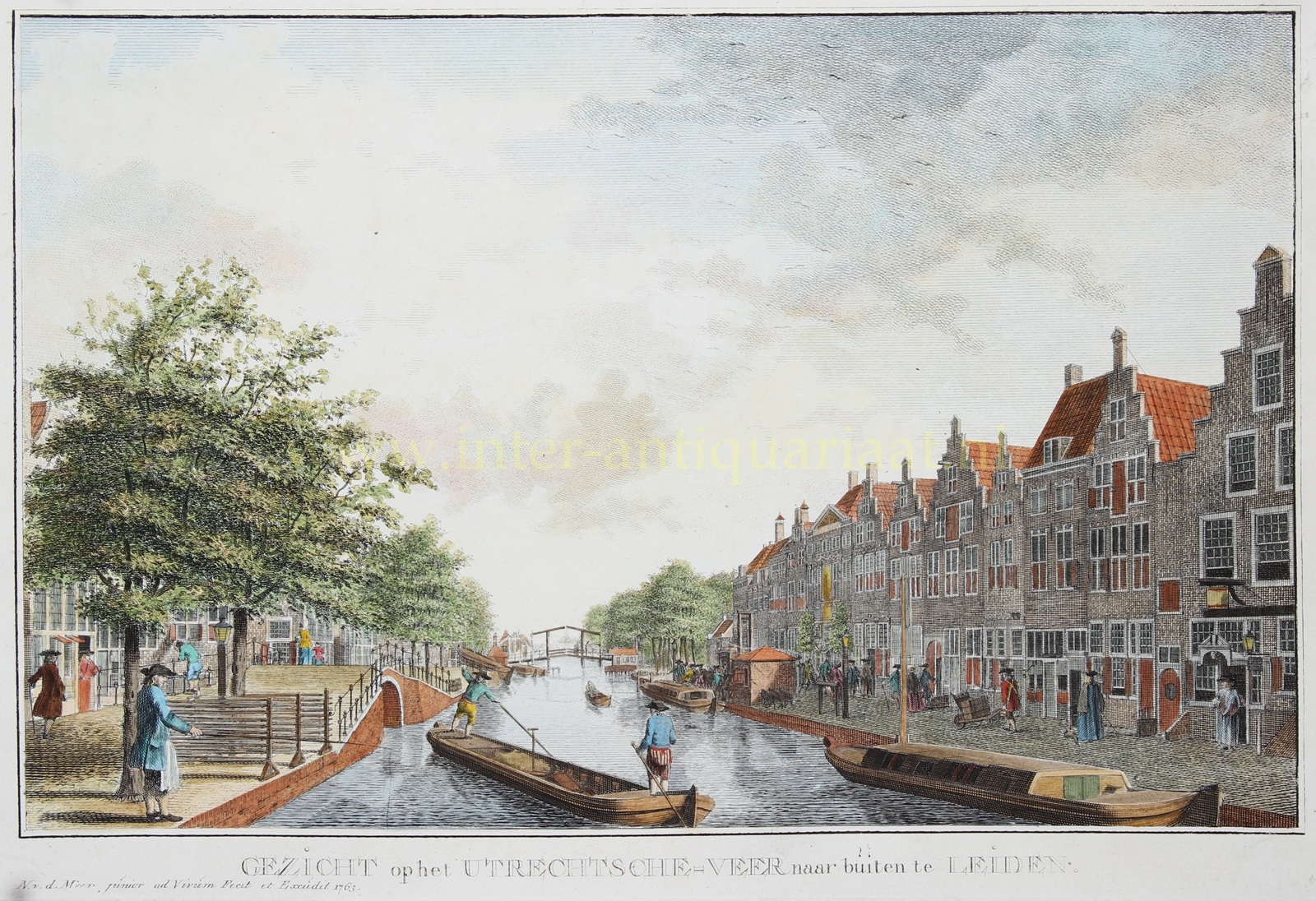
“Gezicht op het Utrechtsche-Veer naar buiten te Leiden” [View of the Utrecht ferry, looking outwards from Leiden]. Etching and engraving, executed in 1763 by Noach van der Meer. Coloured by a later hand. Plate size: 29.4 × 42.2 cm.
The Utrechtse veer [Utrecht ferry] formed part of the dense network of towboat canals (NL: trekvaarten) that, from the early seventeenth century onwards, connected the cities of the Dutch Republic. From Leiden, the route followed the Nieuwe Rijn and the Oude Rijn, continuing via specially constructed or improved canals towards Woerden and Utrecht. Along the route ran towpaths where horses pulled the vessels, ensuring a regular and predictable service.
The towboat system was not free navigation, but a strictly regulated public transport service, with fixed departure times, standardized fares, and designated landing places. A clear distinction was made between passenger and freight transport. Within this network, Leiden functioned as a western hub, while Utrecht served as a key link to the eastern and southern parts of the Republic.
The small waiting house on the quay marked the official point of departure for the ferry. Here, seats were assigned, fares were checked, and sometimes luggage was registered. At the same time, it served as a point of supervision, intended to prevent unauthorized competition from private boatmen.
The canal in Leiden is called Utrechtse Veer still today.
Price: Euro 525,-