

Siege of Breda – Jacques Callot, 1624-1625
€6.500
MASTERPIECE BY JACQUES CALLOT
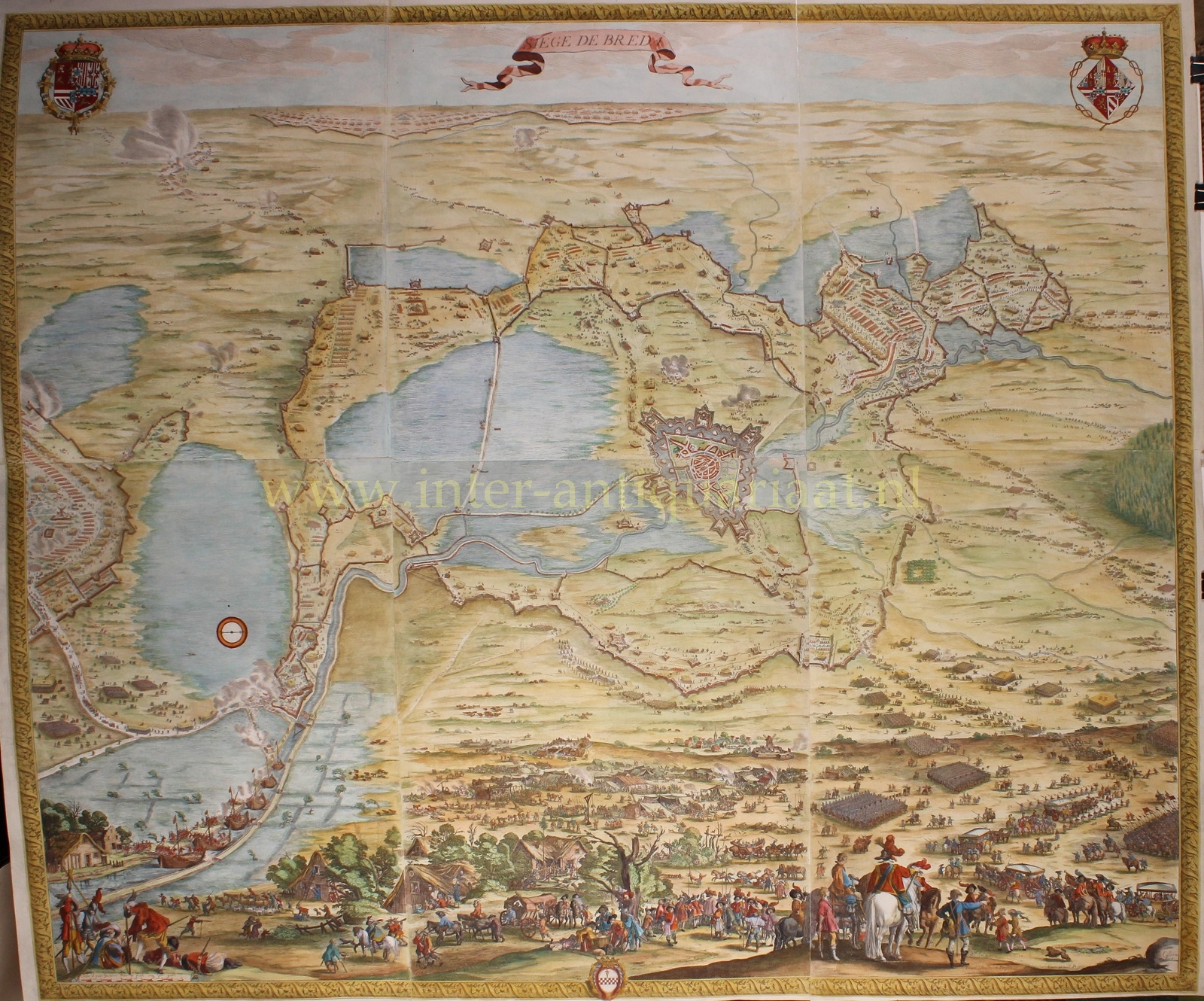
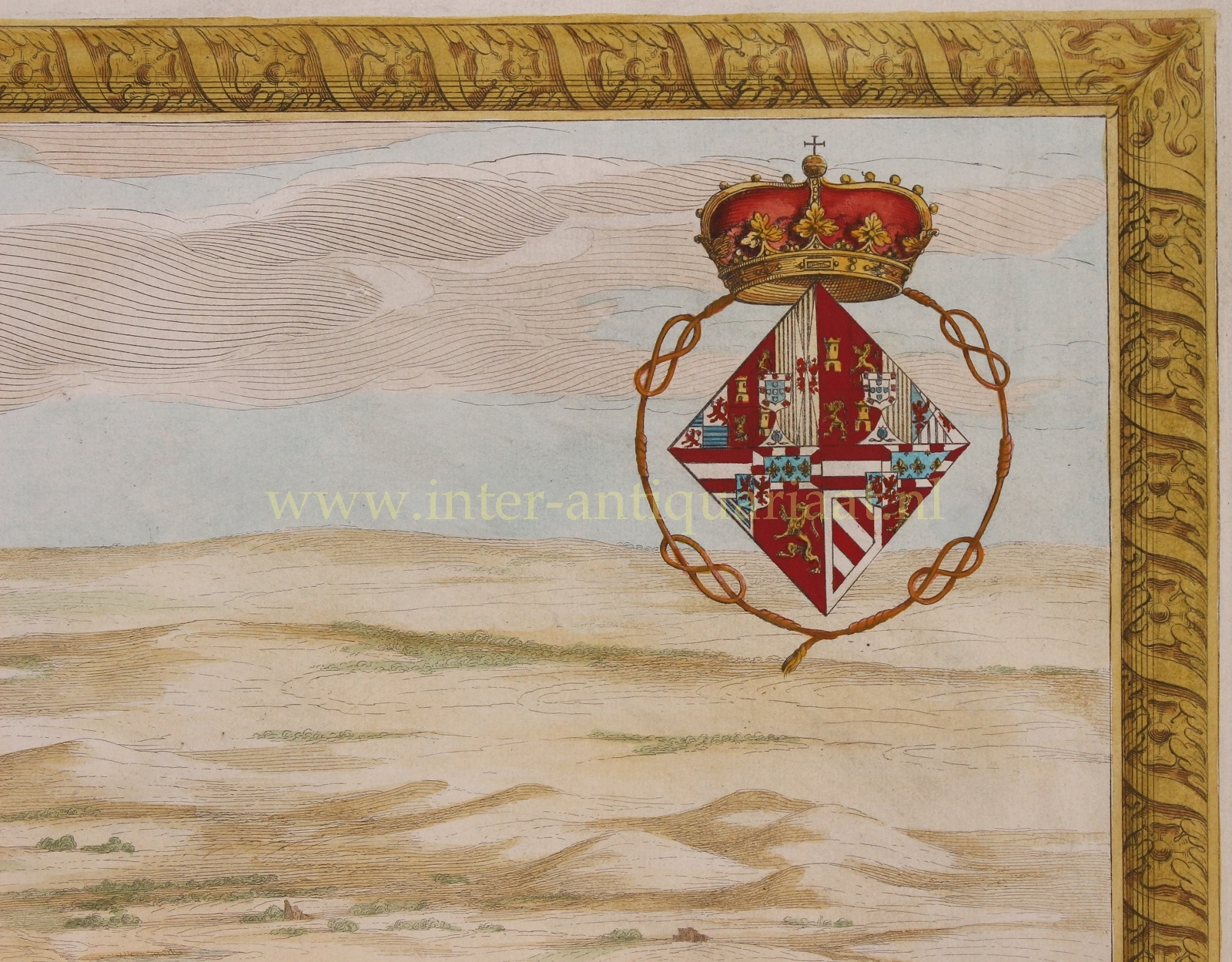
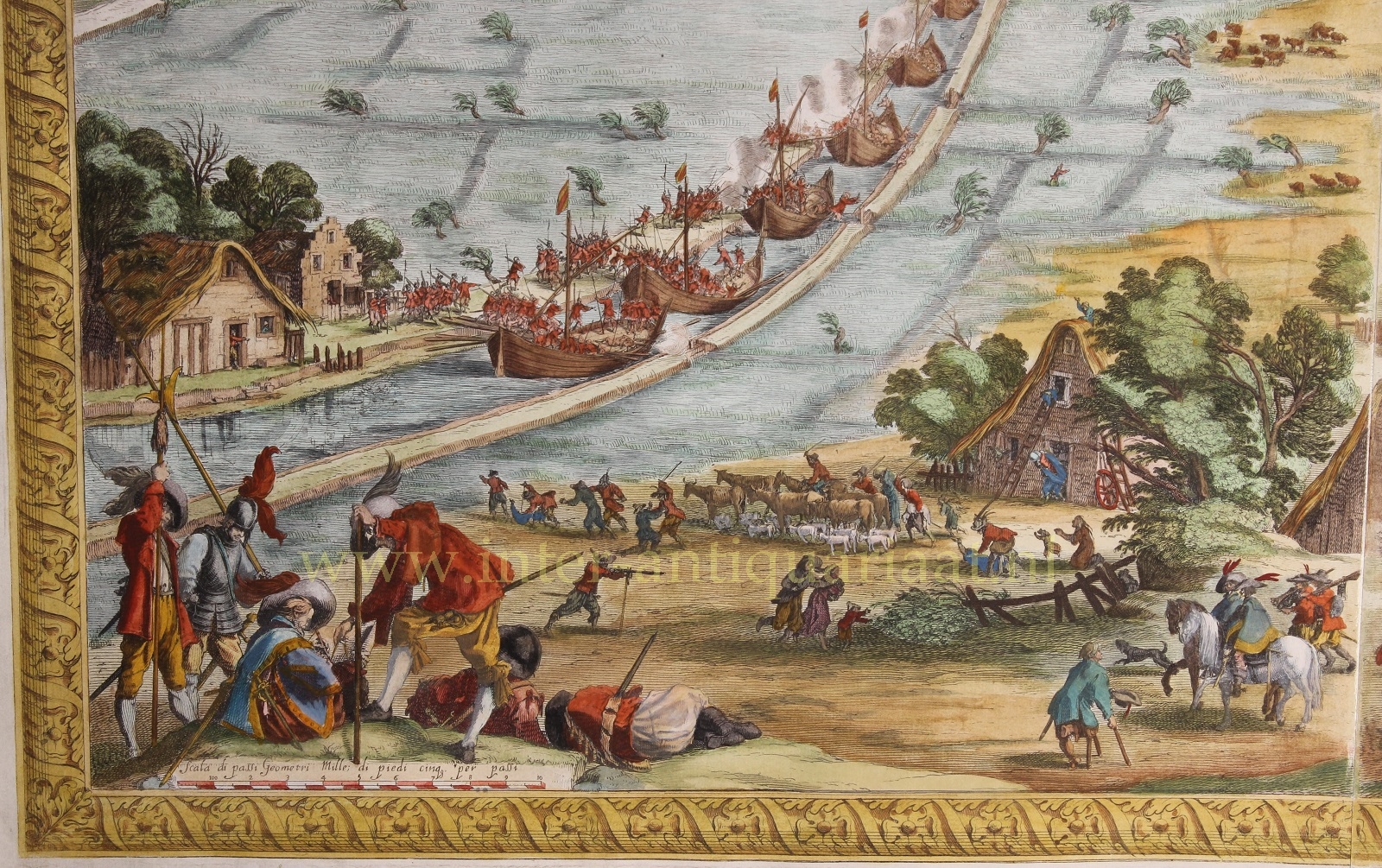
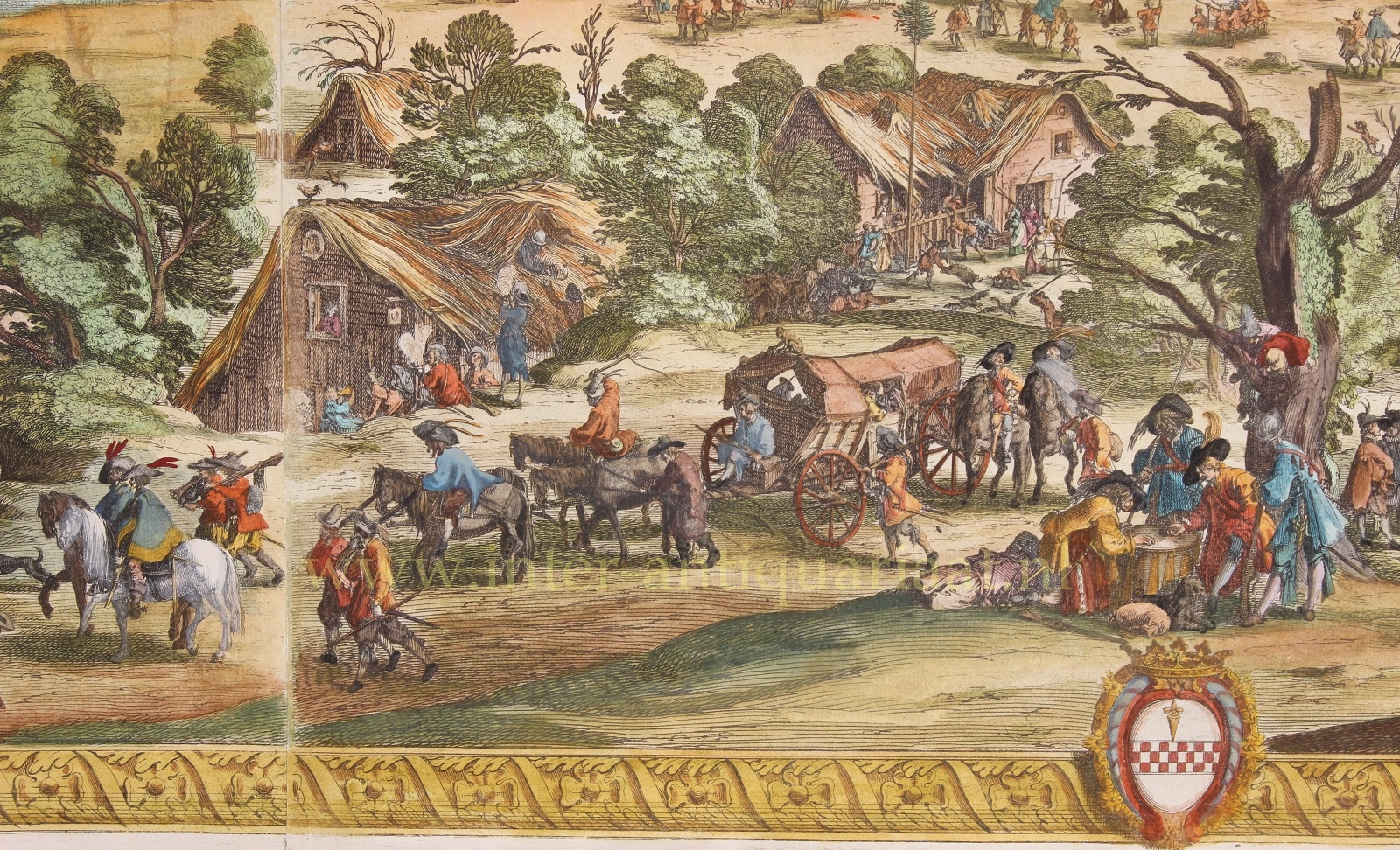
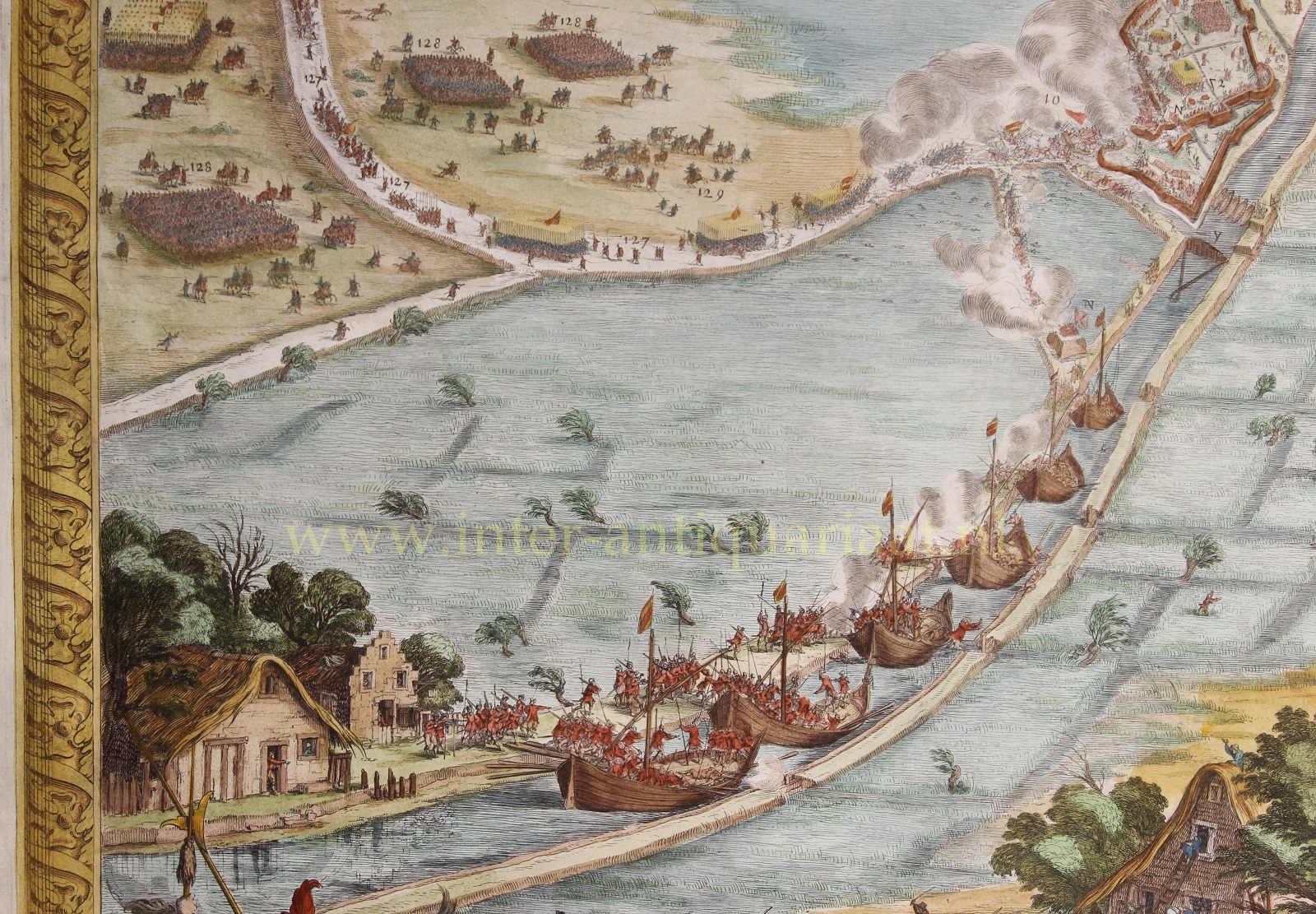
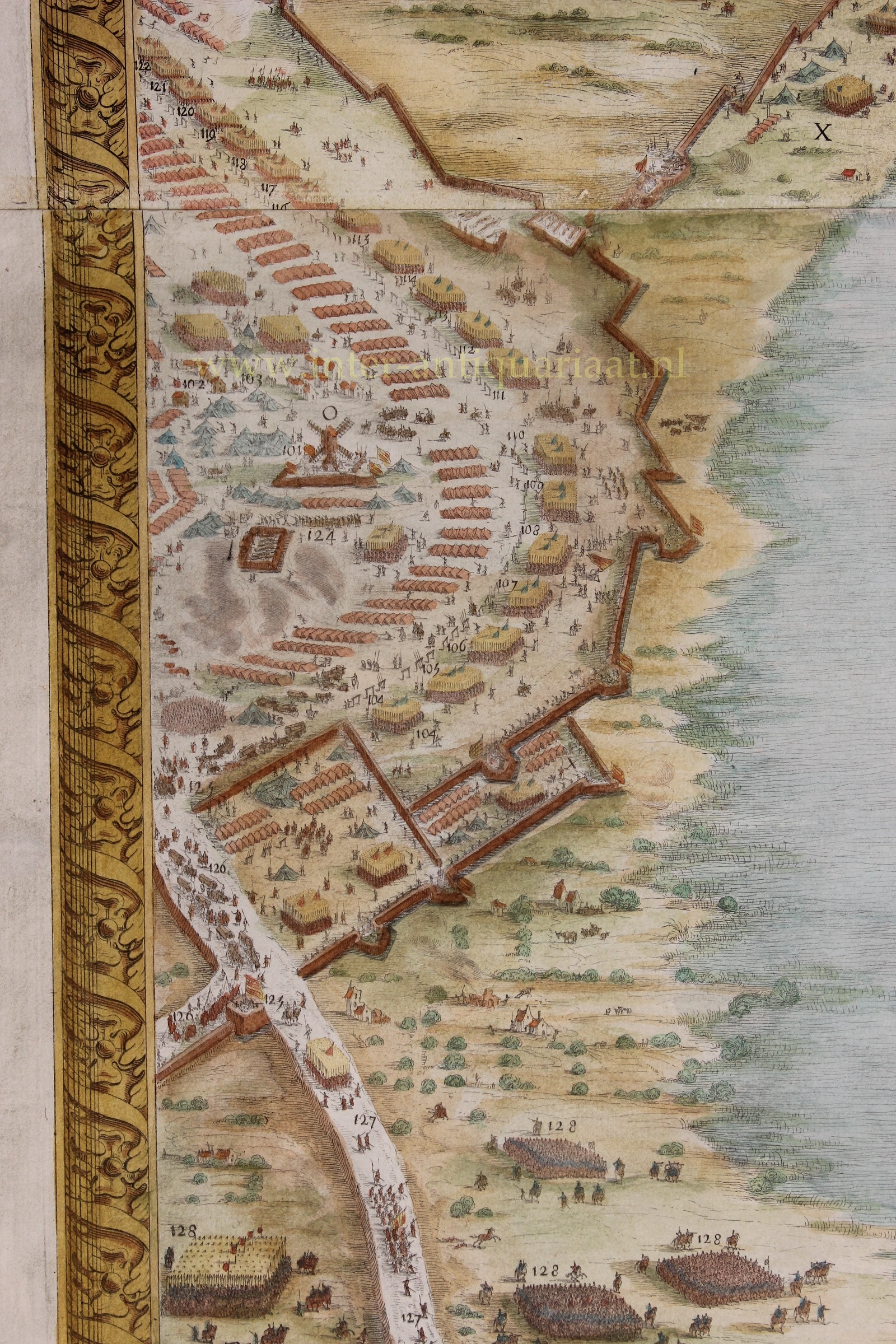
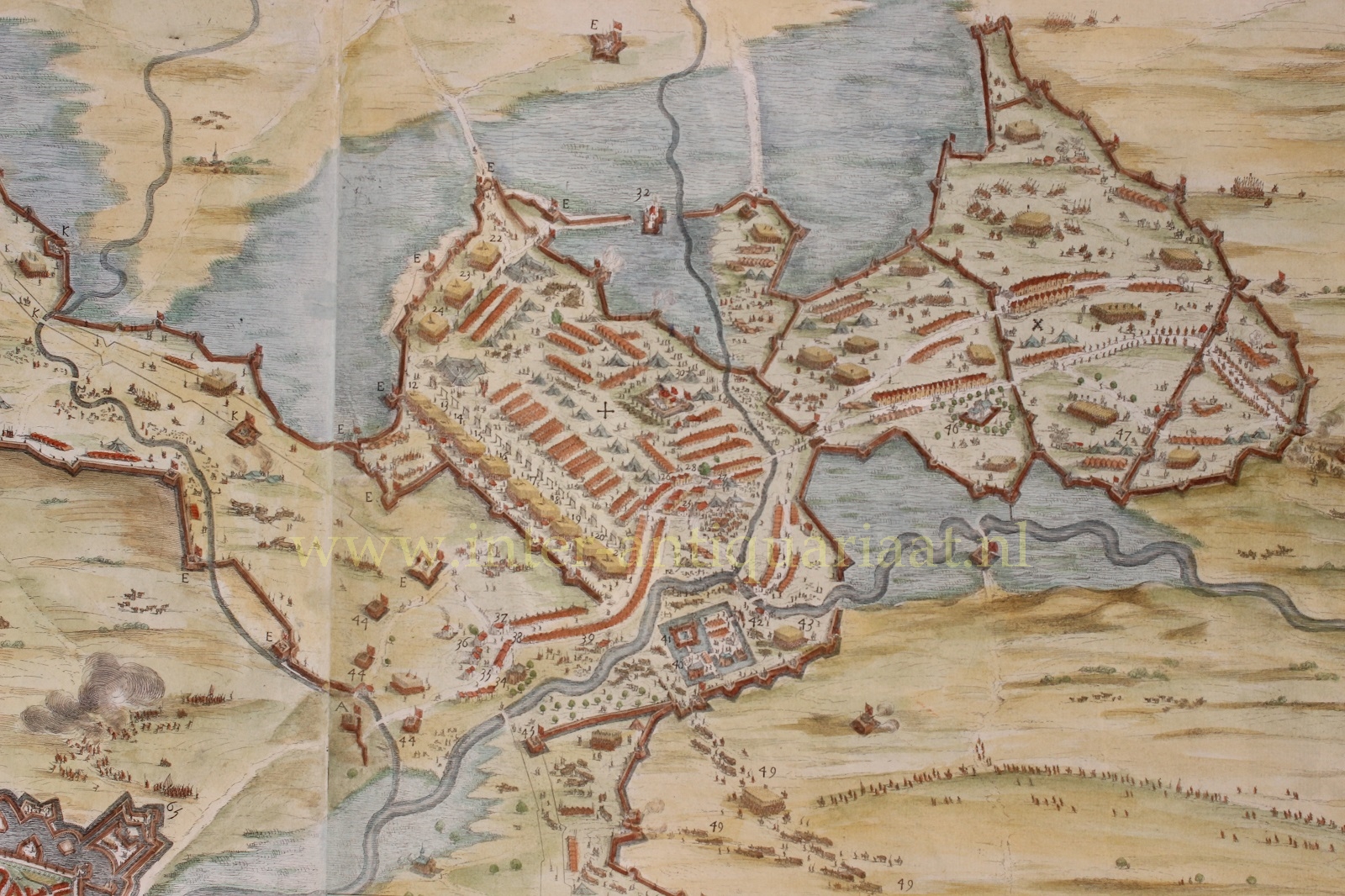
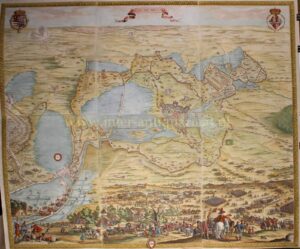
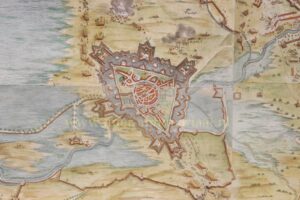
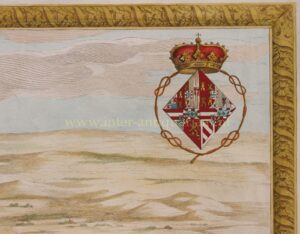
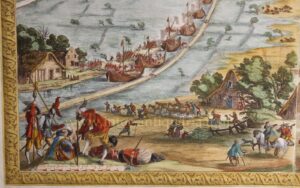
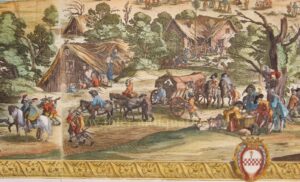
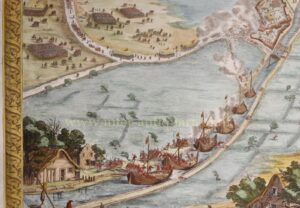
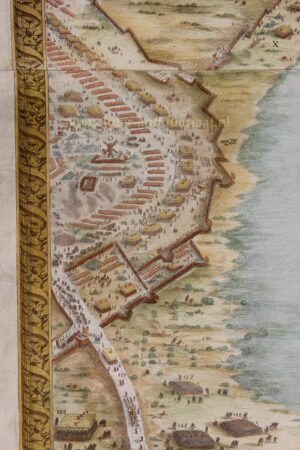
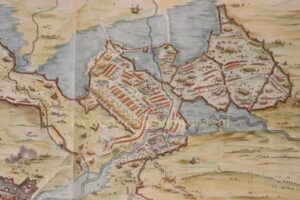
“Siège de Breda.” Rare map of the siege of the fortified city of Breda and its surroundings during the Dutch Revolt. Etching with engraving in six sheets, made by Jacques Callot, 1624–1625. Coloured by a later hand. Size: approx. 123 × 140 cm.
The scene unfolds in the midst of the Eighty Years’ War (the Dutch Revolt, 1568–1648), in which the northern (Protestant) Dutch Republic rebelled against Spanish Catholic rule.
In 1588, the Spanish Armada was defeated with English support, marking a turning point in the conflict. The Republic not only developed a formidable naval power but also, under Prince Maurice, a disciplined and effective army. Both land and naval forces operated under the strong political leadership of Johan van Oldenbarnevelt. Maurice subsequently took the offensive, and between 1590 and 1597 a series of towns and fortresses in the northern provinces—beyond Holland, Zeeland, and Friesland—were gradually captured from Spanish control.
The Republic steadily emerged as a power of consequence, leading to the Triple Alliance with France and England in 1596 and its de facto recognition as an independent state. Following the death of Philip II in 1598, sovereignty over the Netherlands passed to his daughter Isabella Clara Eugenia, who became governess of the Spanish Netherlands.
Under Isabella, the war continued unabated. After the Republic’s setback at the Battle of Nieuwpoort (1600) and its naval victory at Gibraltar (1607), a truce was concluded in 1609—the Twelve Years’ Truce. Though not a formal peace, it effectively acknowledged the Republic’s independence.
When hostilities resumed after the truce, Spain renewed its efforts to subdue the Republic with some initial success. The Dutch position had weakened due to internal conflicts and the execution of Oldenbarnevelt in 1619, while Maurice himself was no longer in his prime. The Republic adopted a defensive stance, and in 1624 the siege of Breda began.
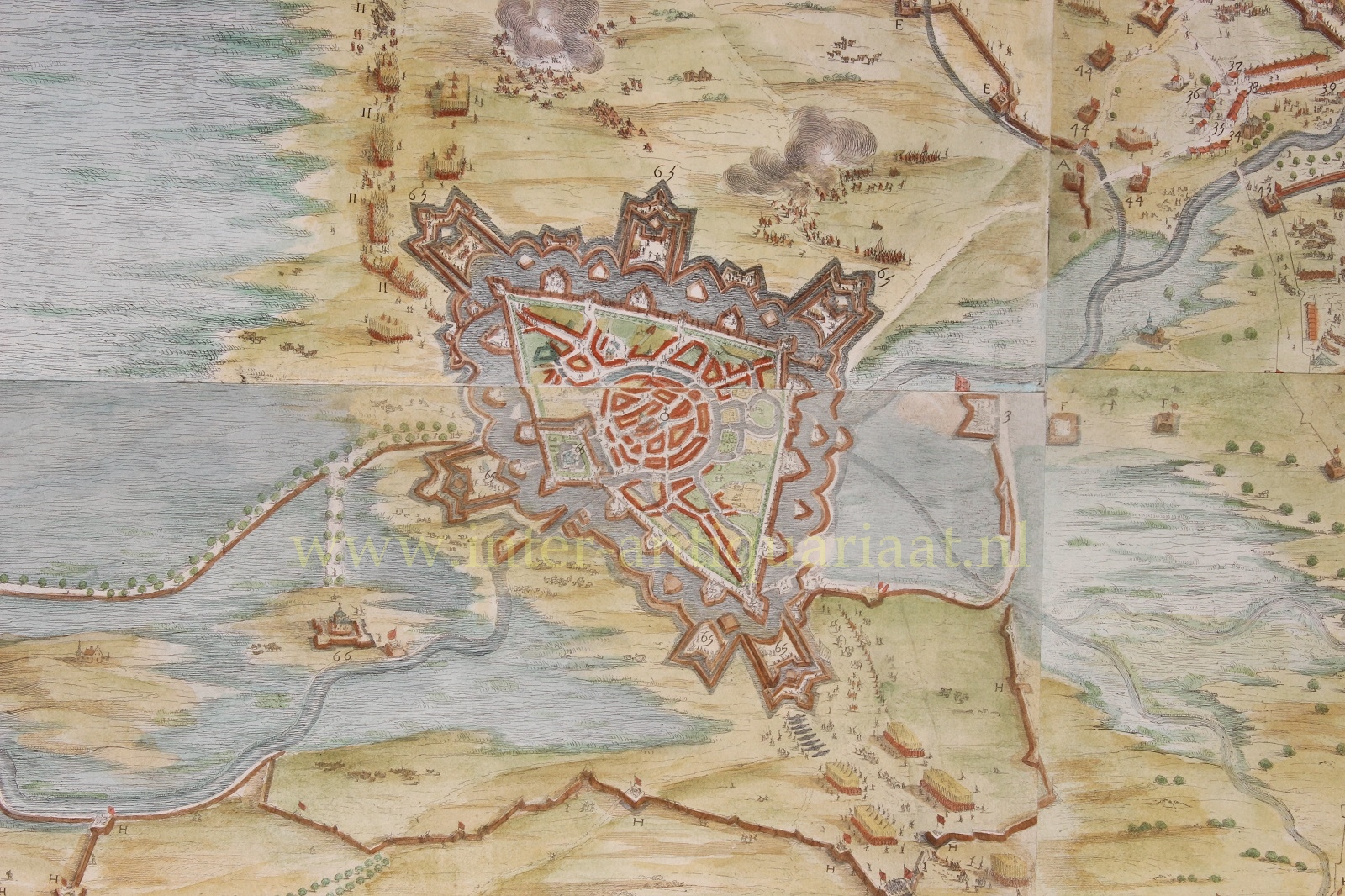
On 21 July 1624, Ambrogio Spinola departed Brussels for Turnhout, where an army of 18,000 men awaited him. The occupation of Ginneken on 27 August marked the effective start of the siege. The defence of Breda was led by Justinus van Nassau. At the time, the city contained 6,309 civilians—citizens, inhabitants, and farmers—while the garrison, including soldiers’ wives and children, numbered 6,802 persons.
Breda was a strong fortress city, strategically controlling the routes to Utrecht and Amsterdam. The eleven-month siege captivated all of Europe. Contemporary news pamphlets reported weekly developments, and princes and nobles visited the site. Two days after the city’s surrender on 5 June 1625, Isabella herself came to witness the aftermath.
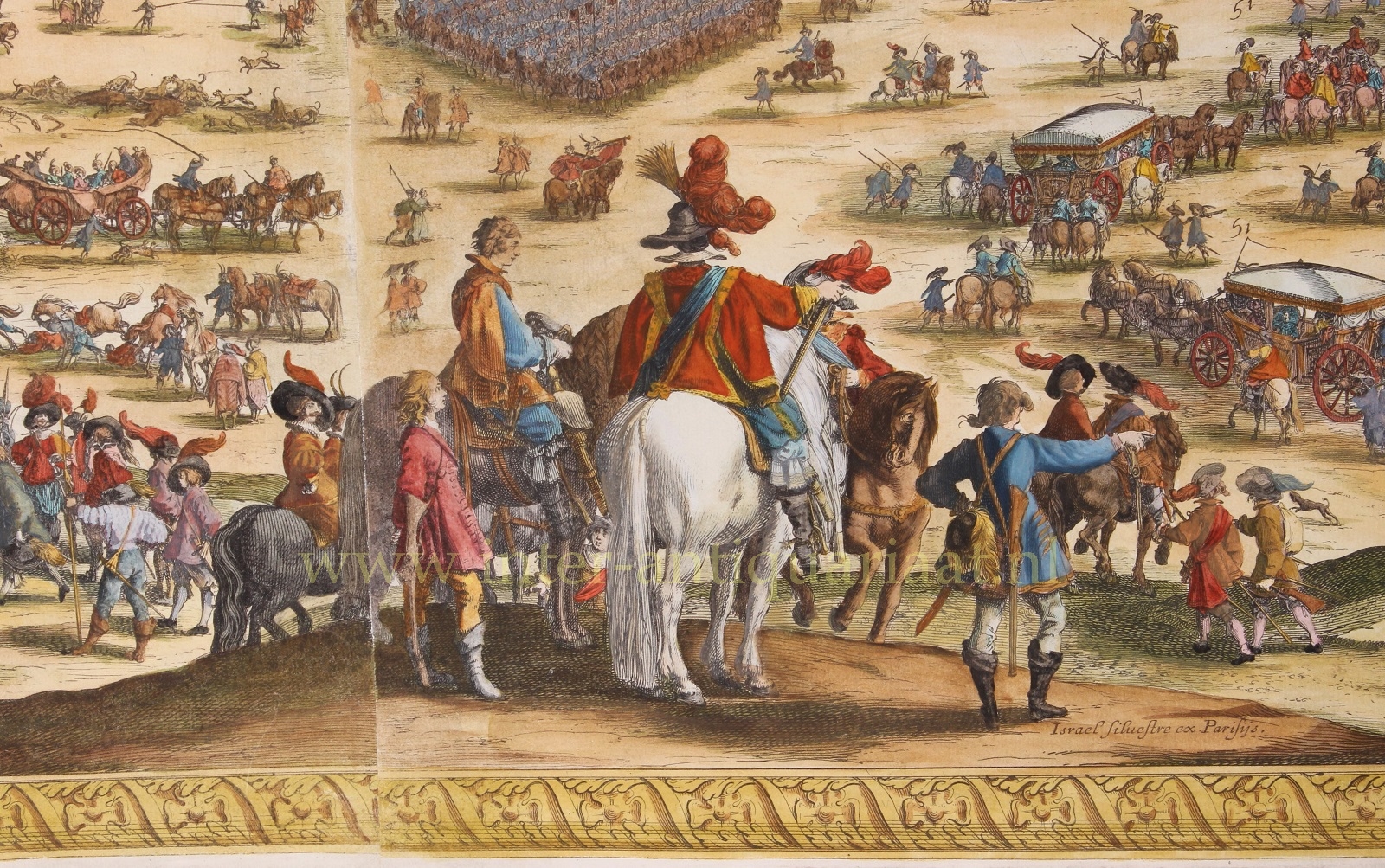
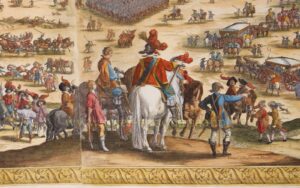
This spectacle forms the subject of the present print, in which Isabella, Governor of the Spanish Netherlands, is prominently depicted at the lower centre.
Isabella commissioned the French artist Jacques Callot (1592–1635) to produce this masterpiece. The composition not only illustrates Spanish military ingenuity in the capture of the city, but also served to justify the enormous expenditure of money and human lives required for the campaign. Callot has included himself in the lower left of the map; beside him stands Gian Francesco Cantagallina, holding a pair of dividers. During the siege, Cantagallina served as Spinola’s engineer and designer of the siege works. Using his data, Callot constructed the map. He himself was not present during the siege, only visiting Breda after the surrender in October 1625, and subsequently integrated the principal events into a carefully composed narrative landscape.
Price: Euro 6.500,-