

Dutch Berbice (Guyana) – Reinier & Josua Ottens, 1740
€850
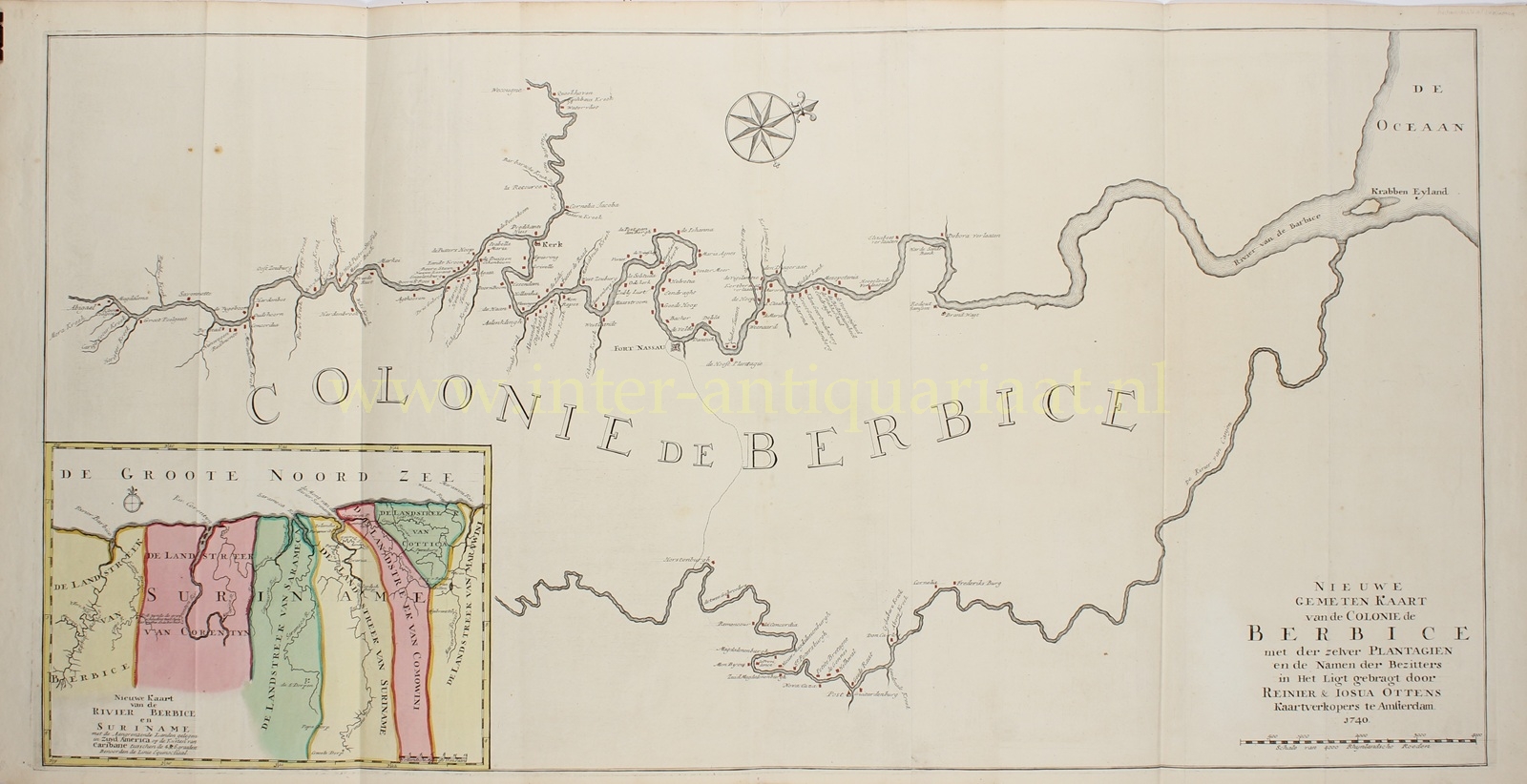
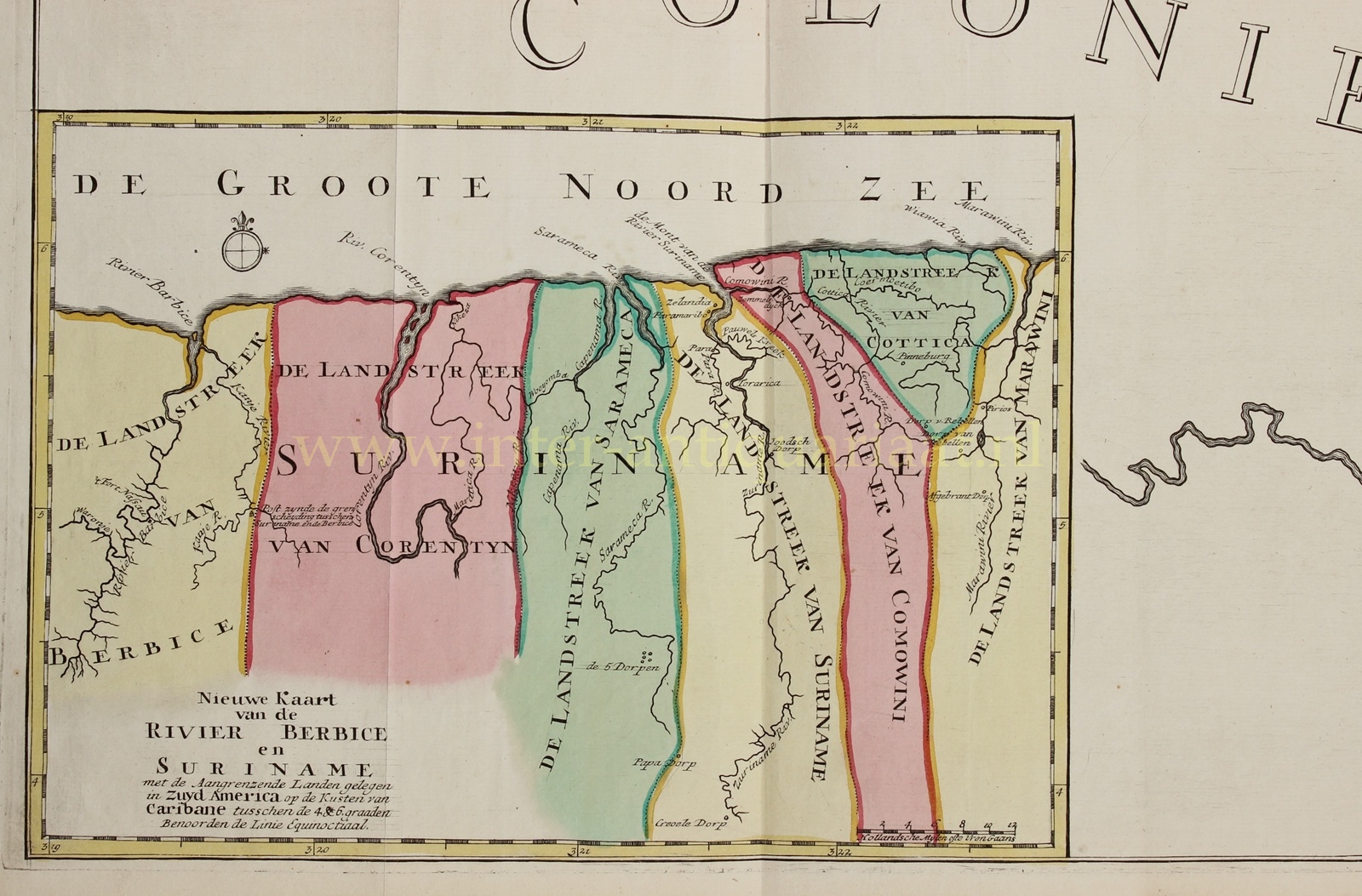


THE DUTCH COLONY OF BERBICE (PRESENT-DAY GUYANA)
“Nieuwe Gemeten Kaart van de Colonie de Berbice met der zelver Plantagien en de Namen der Bezitters” Copper engraving published by Reinier and Josua Ottens in 1740. With original hand colouring. Size: approx. 48.6 × 96.5 cm.
The Dutch colony of Berbice originated in the early seventeenth century as a private enterprise along the river of the same name, west of the Corantijn. In 1624 the Vlissingen merchants Abraham van Pere and Pieter van Rhee established a small trading post here. Three years later an agreement was concluded with the Zeeland Chamber of the Dutch West India Company, granting Berbice the status of a patroonship (a Dutch form of feudal land grant). The settlement subsequently developed into a plantation colony, focused on the export of sugar, coffee, and cotton, sustained by the forced labour of enslaved people.
The administrative and military heart of the colony was Fort Nassau, founded in 1627 about 88 kilometres inland along the Berbice River (shown centrally on the map). The fort was initially managed privately by the Van Pere family. Around 1630 it was relocated to a more strategically advantageous site, where a new fort was constructed with earthen ramparts and wooden palisades. Over the course of the seventeenth century, Fort Nassau was repeatedly expanded and reinforced.
The colony was vulnerable to attacks by privateers and hostile powers. In 1665, Commander Bergenaer, with the support of Indigenous allies, succeeded in repelling an English attack. More destructive were the French incursions at the end of the seventeenth and the beginning of the eighteenth century. In 1689 privateers under Jean du Casse caused extensive damage along the river, after which a ransom of 20,000 guilders was paid. In 1712 a new attack followed under Jacques Cassard, and once again total destruction was averted only by the payment of an enormous sum of 300,000 guilders in money, goods, and enslaved people. In that same year, Fort Nassau was destroyed.
The financial consequences proved fatal for the heirs of the original patrons. Although Berbice had been granted as a hereditary fief to the Van Pere family by the West India Company in 1678, they were forced after 1712 to sell the colony. In 1720 Berbice came into the hands of a consortium of Amsterdam merchants, who founded the Sociëteit van Berbice. From that point onward, the colony was governed by a governor acting on behalf of this private trading company.
During the Berbice Rebellion of 1763, Fort Nassau was definitively destroyed. A pre-existing fort near the mouth of the Berbice River was subsequently expanded and strengthened and, under the name Nieuw-Amsterdam, became the new residence of the governor.
In 1782 the territory was occupied by the British, but later that same year it was recaptured by a French squadron and returned to the Dutch Republic at the peace settlement. After the French Period, however, the British did not return the colony.
Price: Euro 850,-