

Siege of Haarlem – Hendrik Spilman, 1747
€5.950
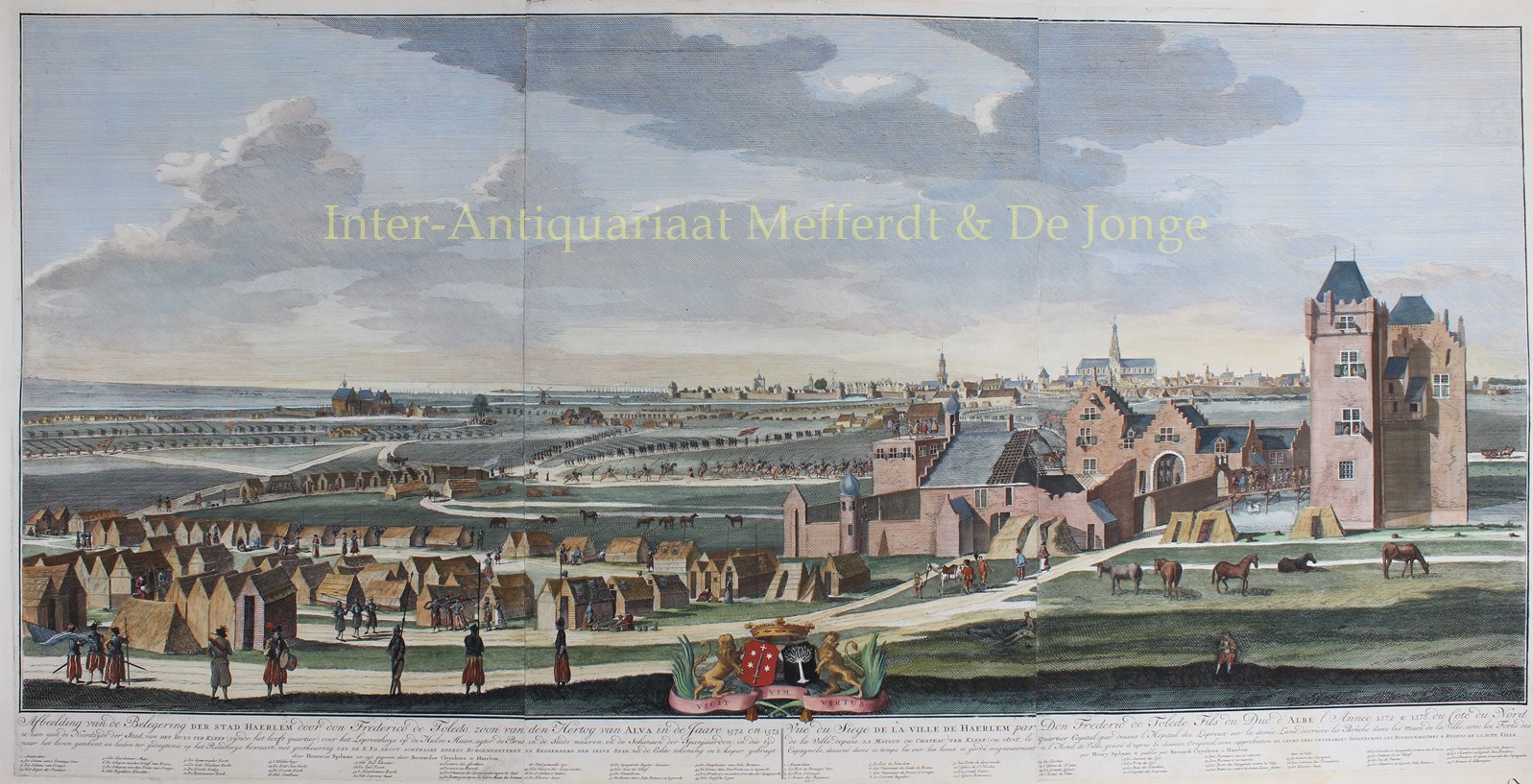
SIEGE OF HAARLEM
“Afbeelding van de Belegering der stad Haerlem door don Frederico de Toledo, zoon van den Hertog van Alva in de jaare 1572 en 1573, te zien aan de noordzyde der stad, van het Huys ter Kleef (zynde het hooft quartier) over het Leprooshuys op de Halve Maan, agter de Bres, in de stads muuren, en de schansen der Spanjaarden, in die tijd naar het leven getekent (…).” [View of the Siege of the city of Haarlem by Don Federico de Toledo, son of the Duke of Alba, in the years 1572 and 1573, seen from the north side of the city, from Huis ter Kleef (being the headquarters), across the Leper Hospital on the Half Moon, behind the breach in the city walls, and the Spanish redoubts, drawn from life at the time (…).]
Copper engraving on three joined sheets made by Hendrik Spilman in 1747, after a drawing attributed to Thomas Thomasz, published in Haarlem by Bernardus Kleynhens. Coloured by a later hand. Size: approx. 73 × 149 cm.
The print depicts an episode from the Siege of Haarlem by the Spanish. In the right foreground stands Huis ter Kleef, which served as the headquarters of the Spanish besieging forces. On the left are the tents of the so-called ‘soetelaars‘ (sutlers) and the Regulieren monastery. In the background lies the city of Haarlem with its principal taller buildings. The highest point is the Grote or St Bavo’s Church, just right of centre. The view is looking south.
The Siege of Haarlem began on 3 December 1572 with a letter from Stadtholder Bossu and Fadrique Álvarez de Toledo (better known as Don Frederik), son of the feared Duke of Alba, calling upon the inhabitants of Haarlem to surrender. Their refusal was followed by a siege lasting more than seven months, which ended on 12 July 1573 when the city capitulated. More than two thousand soldiers and civilians were subsequently executed. The siege is regarded as one of the most notorious episodes of the Eighty Years’ War.
The breach in the city wall mentioned in the title of the print had been created by Don Frederik’s army, which systematically attempted to bring down the fortifications with cannon fire and by undermining the walls. The inhabitants of Haarlem, for their part, did their best to repair the defences by constructing additional earthworks inside the walls and causing the tunnels dug beneath the fortifications to collapse.
Literature:
- Van der Steur “Harlemia Illustrata. Haarlem en Zuid Kennermerland in de prentkunst”, nr. 487
- Frederik Muller “Nederlandse Historieplaten”, nr. 610
Price: Euro 5.950,- (incl. frame)