
Nijmegen – Joan Blaeu, 1649
€1.350

NIJMEGEN AS A FORTIFIED CITY ON THE RIVER WAAL, 1649
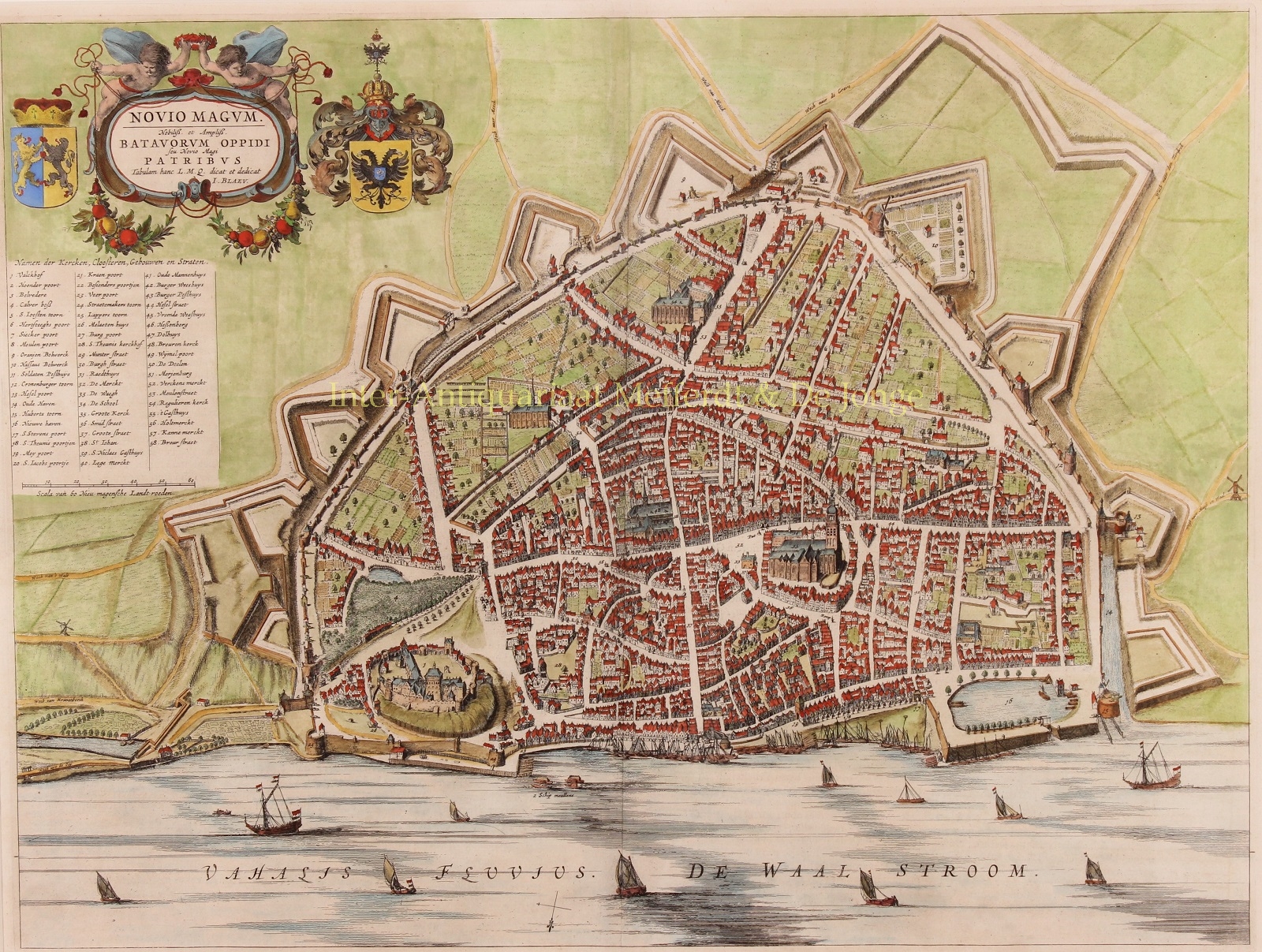
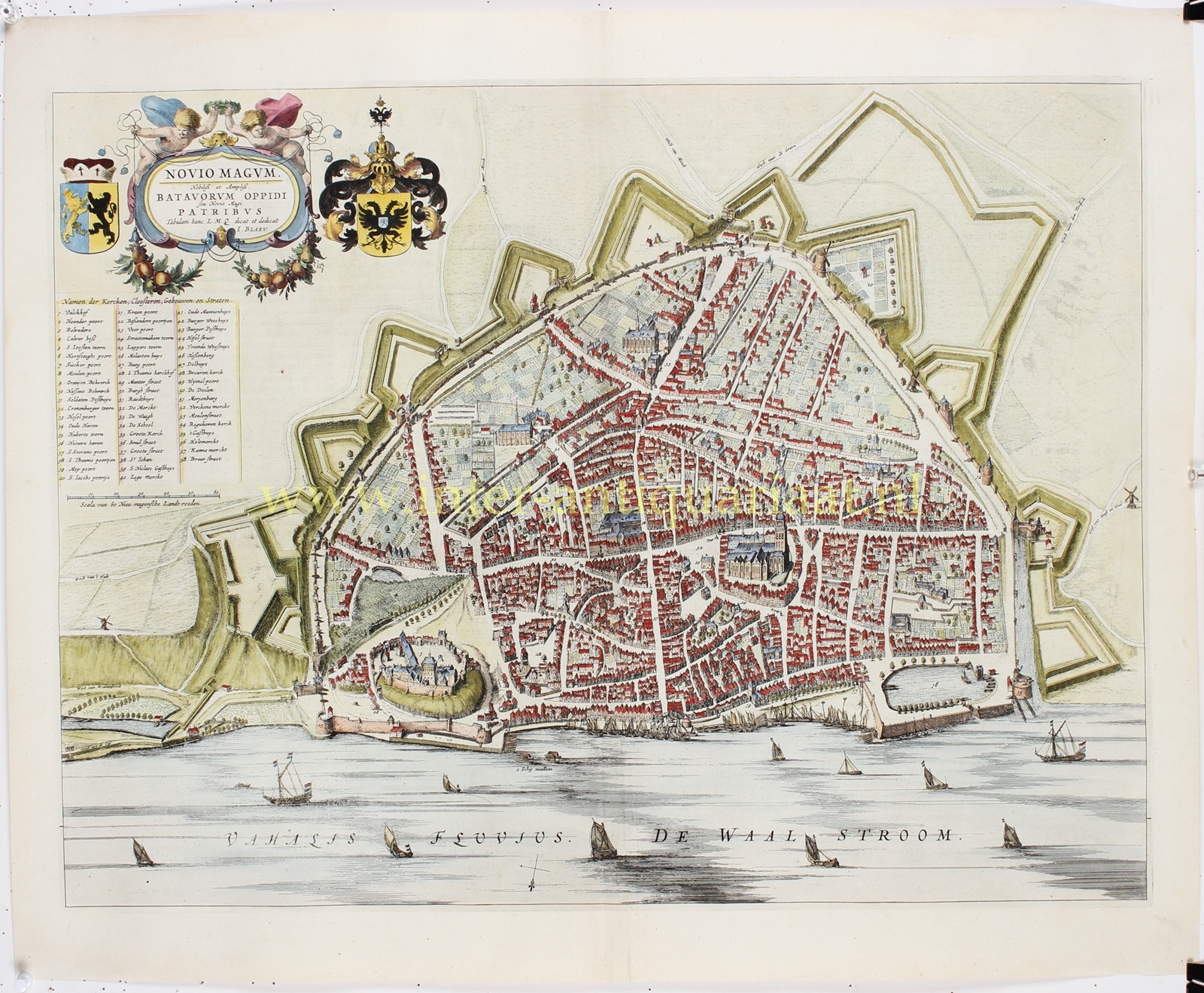
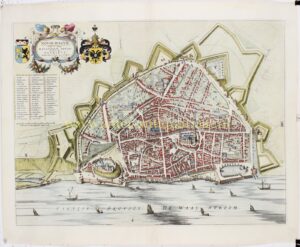
“Novio Magum”, copper engraving after a survey and drawing made by Hendrik Feltman in 1647, published in Amsterdam by Joan Blaeu in 1649 as part of his town book “Novum ac Magnum Theatrum Urbium Belgicae Liberae ac Foederatae“. Coloured by a later hand. Size: approx. 42 × 56 cm.
With the outbreak of the Dutch Revolt against Spanish rule in 1568, Nijmegen entered a turbulent period. During the early stages of the Eighty Years’ War, the city changed hands several times between supporters of Spain and the rebels. In 1591, Prince Maurice definitively brought Nijmegen into the rebel camp. This Siege of Nijmegen brought about a fundamental change in the city’s political and religious order. The Calvinists would dominate civic life for centuries to come. Other religious communities were subjected to restrictions: they were not permitted to practise their faith openly, and for a long time many professions and public offices remained closed to them.
The city’s economic position also changed dramatically. Nijmegen became a garrison town on the eastern frontier of the Dutch Republic, established in 1588. Its traditionally strong position, particularly in the transit trade with the German territories to the east, declined. Prolonged warfare disrupted these commercial connections, and the city was increasingly left with a primarily local and regional trading function.
Although Nijmegen experienced both better and worse periods under the Dutch Republic, it never regained its former position. The years 1635–1636 were particularly disastrous. During a severe outbreak of plague, more than 6,000 people died in Nijmegen. At the time, the city was also overcrowded by the presence of thousands of soldiers and their accompanying households.
Around the middle of the seventeenth century, Nijmegen experienced a brief period of economic revival. The city remained an attractive place of business for publishers, booksellers and printers. From 1656 to 1679 Nijmegen even had its own university, the Kwartierlijke Academie, housed in the Commanderie van Sint Jan on the Korenmarkt.
Blaeu depicts Nijmegen in bird’s-eye view as a densely built and heavily fortified city on the River Waal. The imposing St Stephen’s Church dominates the centre, while on the left, overlooking the river from its elevated position, stands the walled Valkhof with its buildings and chapels. The city is surrounded by an impressive system of ramparts, bastions, gates and towers, including the Oranje and Nassau bastions. The Old and New Harbours, markets, hospitals, monasteries, churches, streets and public buildings are all meticulously indicated. The Waal is enlivened by numerous sailing vessels and cargo ships.
Above the key are the arms of Guelders and the coat of arms of Nijmegen, surrounded by putti, fruit and elaborate ornament. The print thus combines a town plan, bird’s-eye view and detailed map of the city’s fortifications in a single image.
Price: Euro 1.350,-