

Rotterdam – Leonardus Temminck, 1839
€4.950
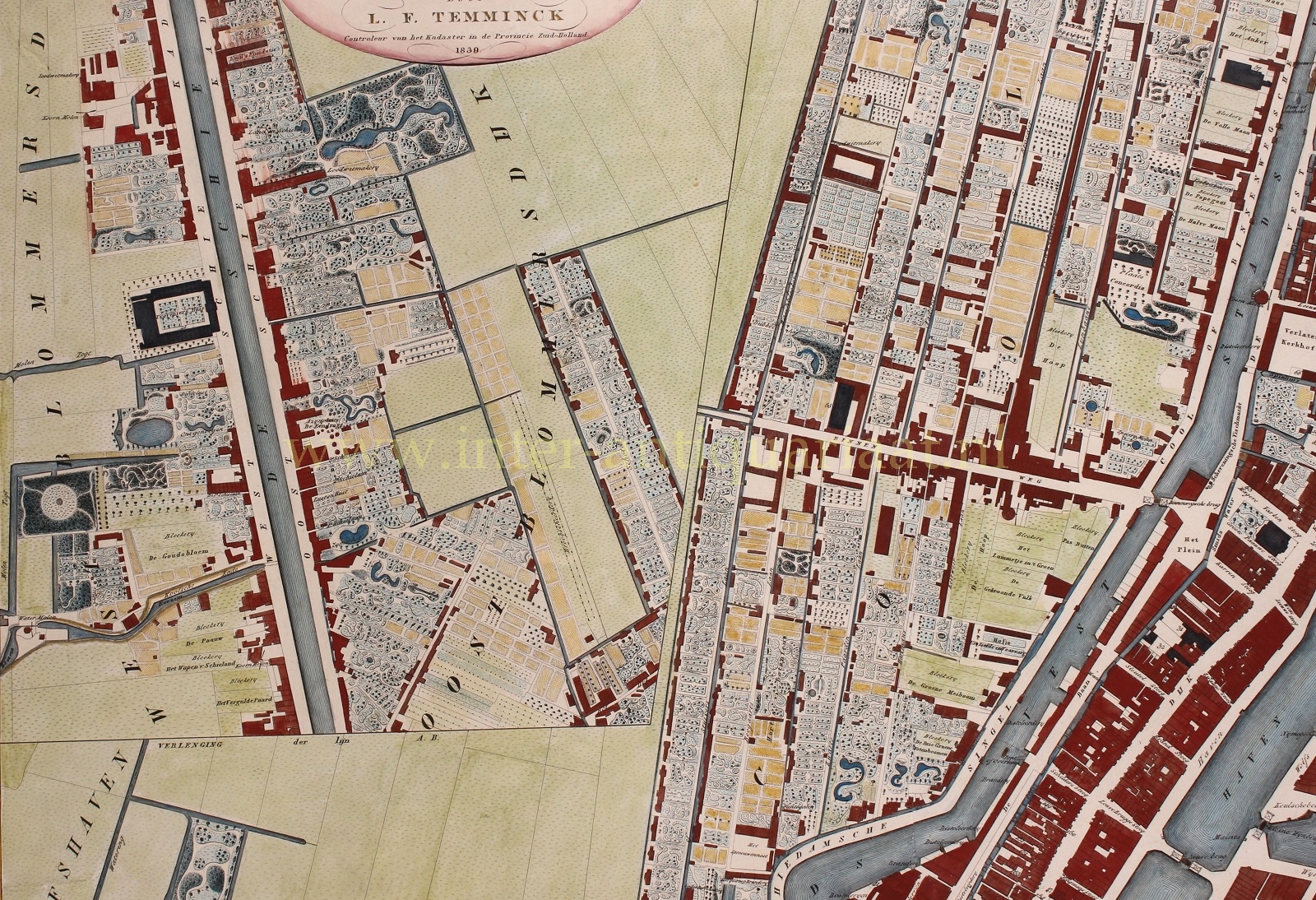
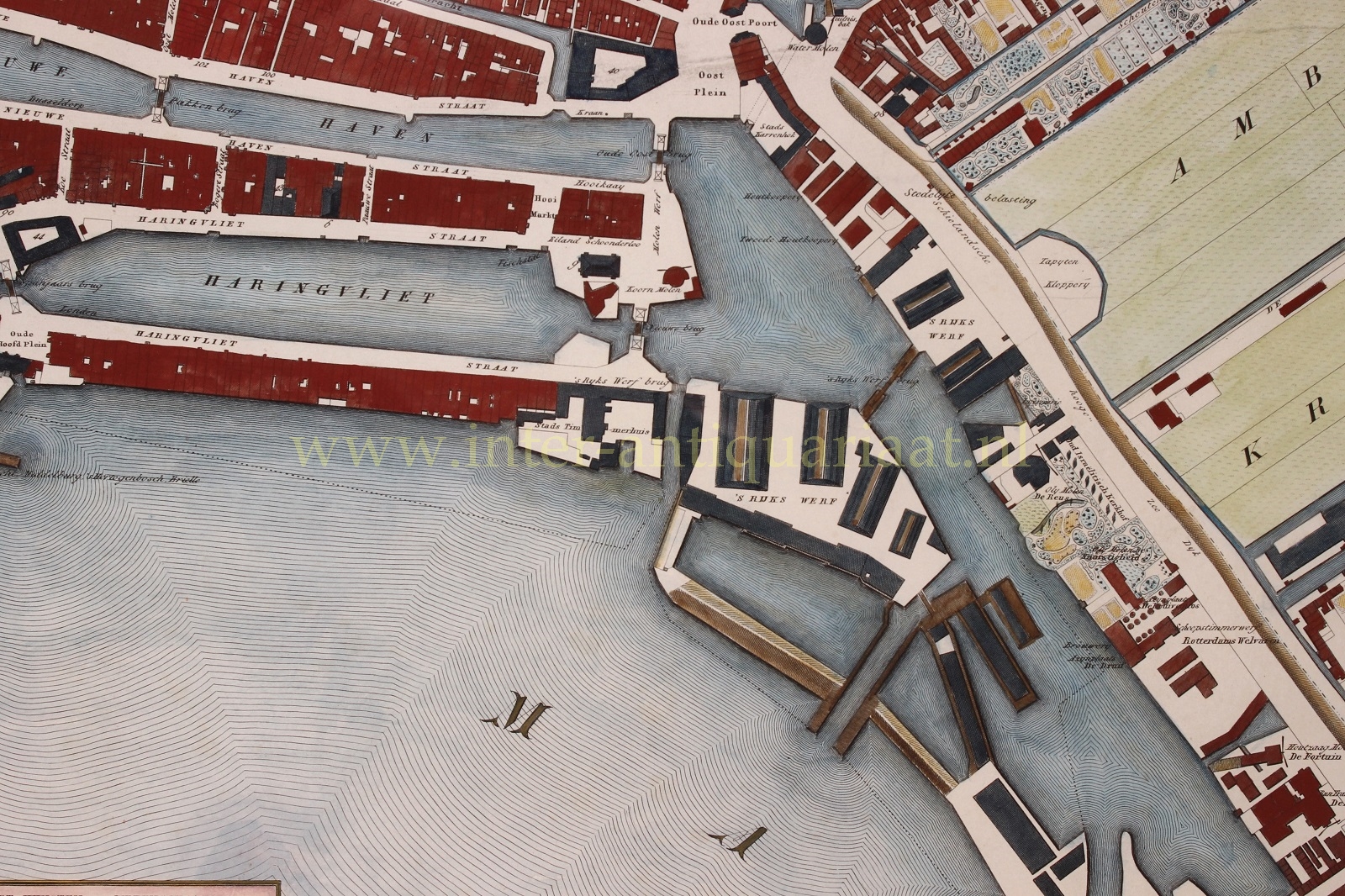
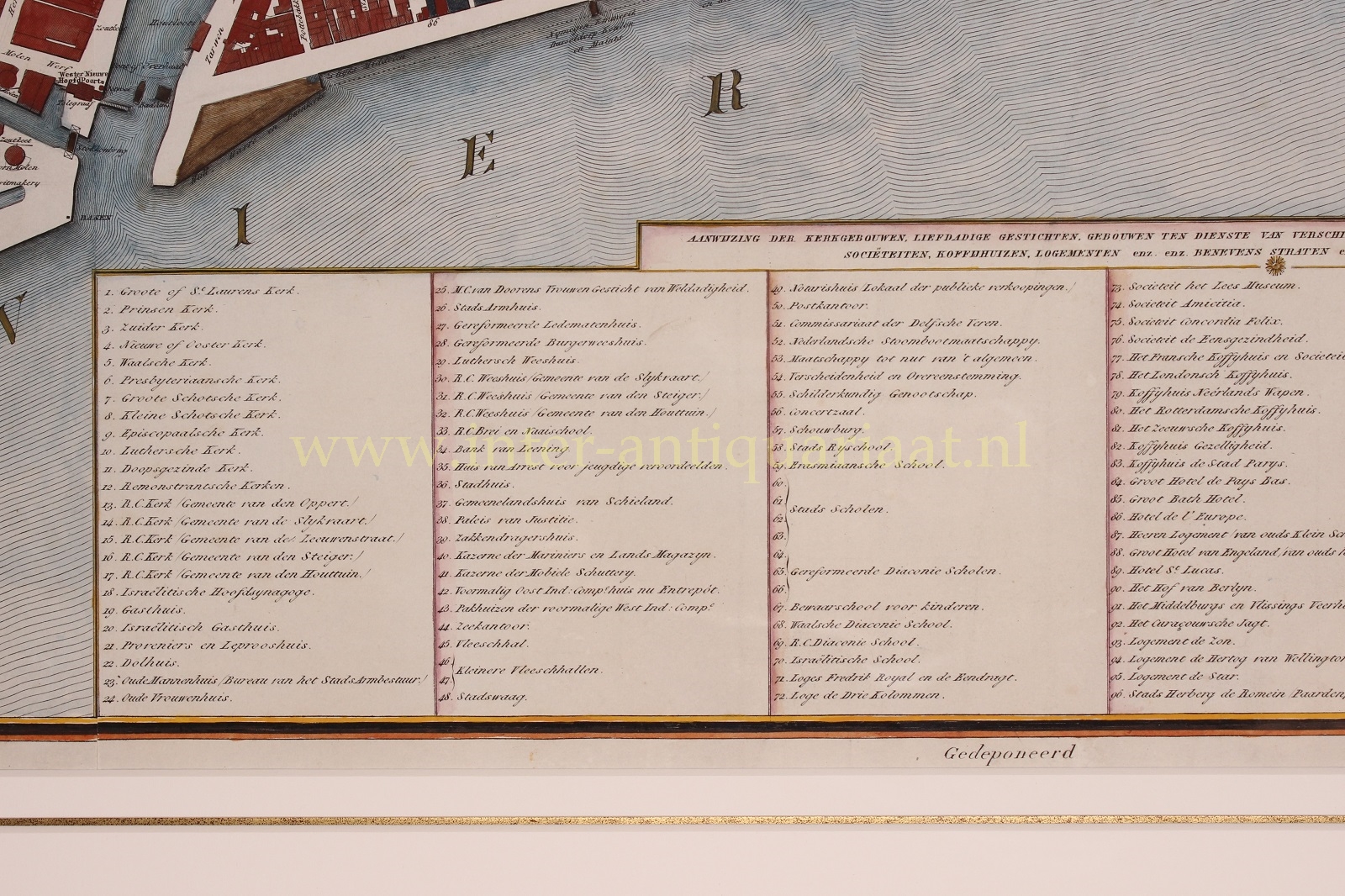
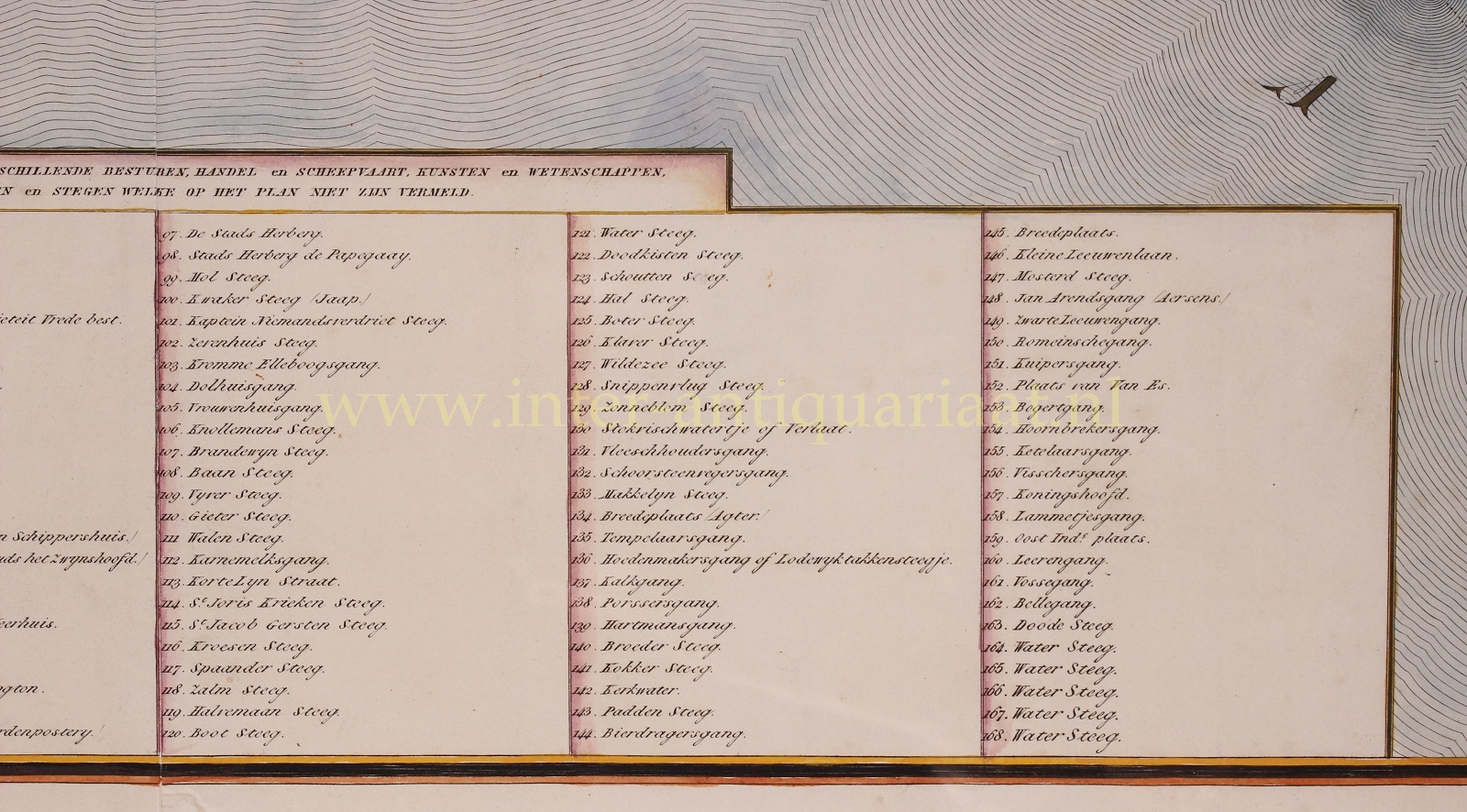
ROTTERDAM IN 1839 – LARGE-SCALE CADASTRAL CITY PLAN
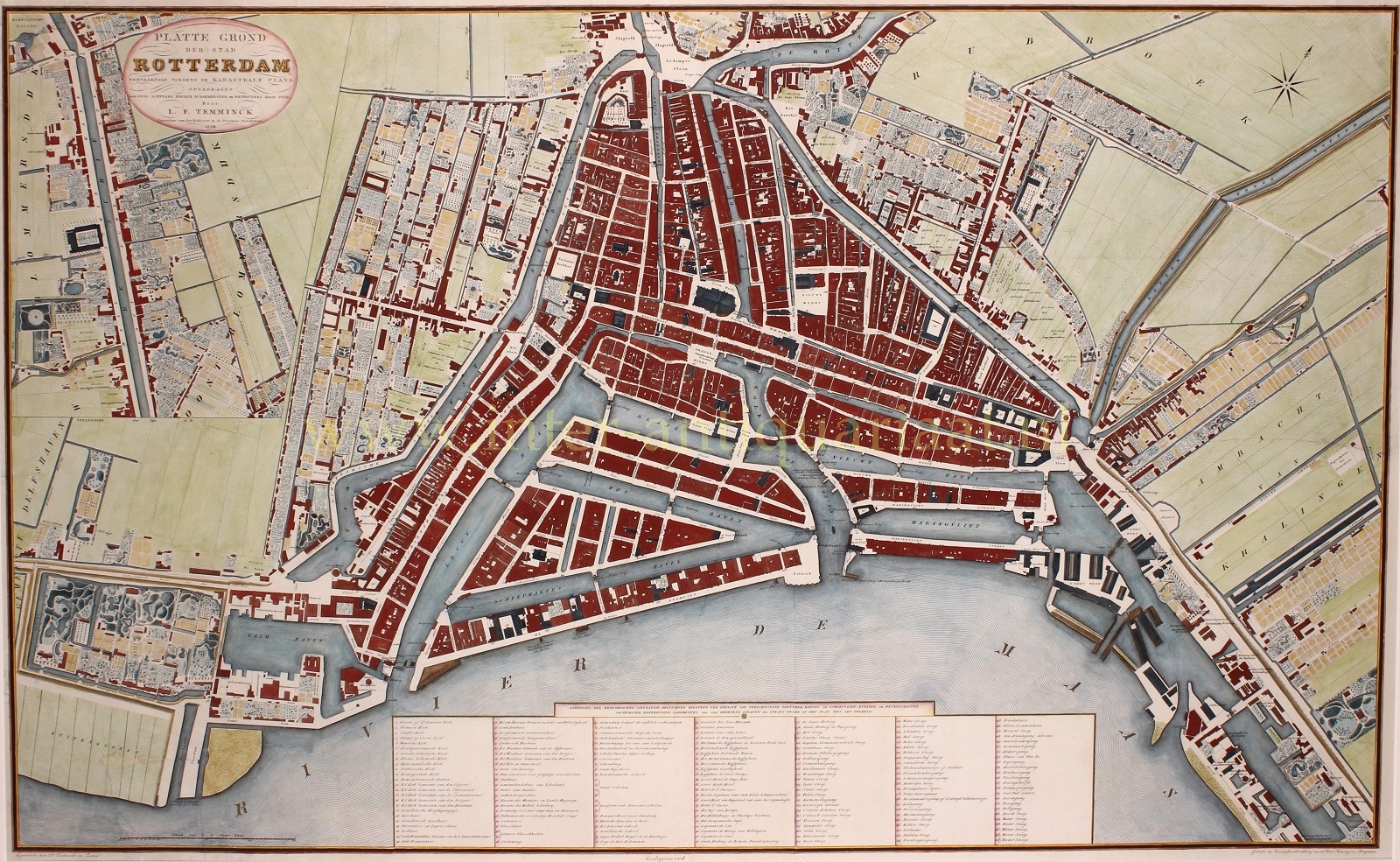
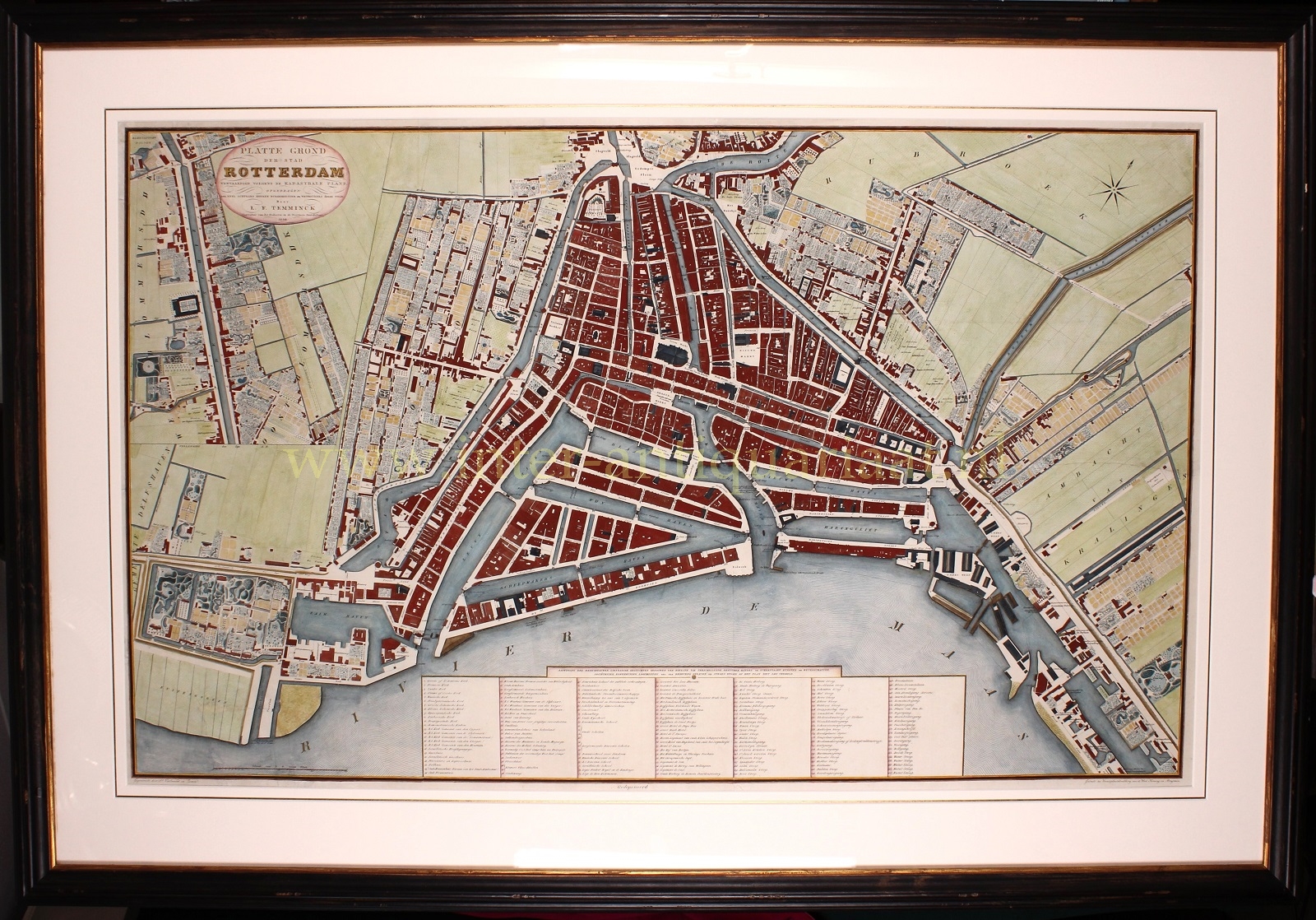
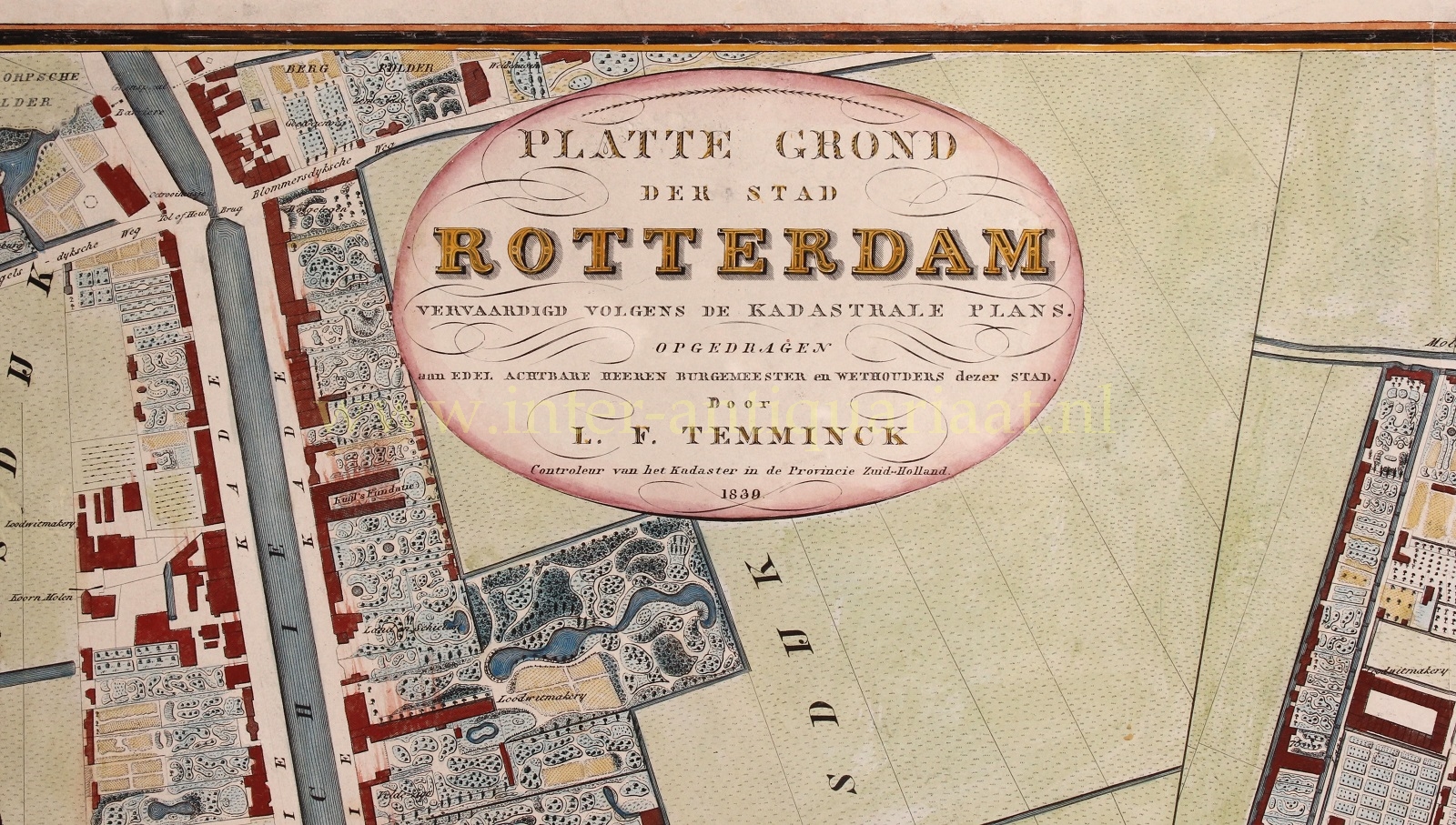
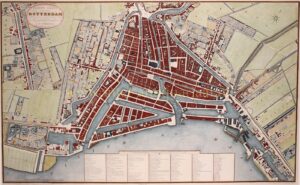
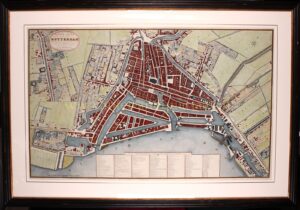
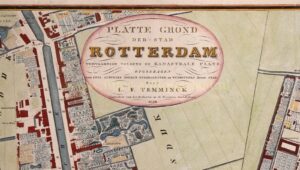
“Platte grond der stad Rotterdam, vervaardigd volgens de kadastrale plans, opgedragen aan Edel Achtbare Heeren Burgemeester en Wethouders dezer stad” [Plan of the City of Rotterdam, based on cadastral surveys, dedicated to the Honourable Mayor and Aldermen of the City], copper engraving produced and published by Leonardus F. Temminck in 1839, engraved by D. Veelwaard en Zonen and printed by Wed. Koning & Brugman. Printed on four joined sheets, partly with contemporary and partly with later hand-colouring. Size (print): 75 × 123 cm.
This monumental city plan is among the most important cartographic documents of Rotterdam from the first half of the nineteenth century. It is the first plan of the city to have been produced on the basis of cadastral surveys, allowing the positions of streets, buildings and individual plots of land to be recorded with a degree of accuracy that was exceptional for its time.
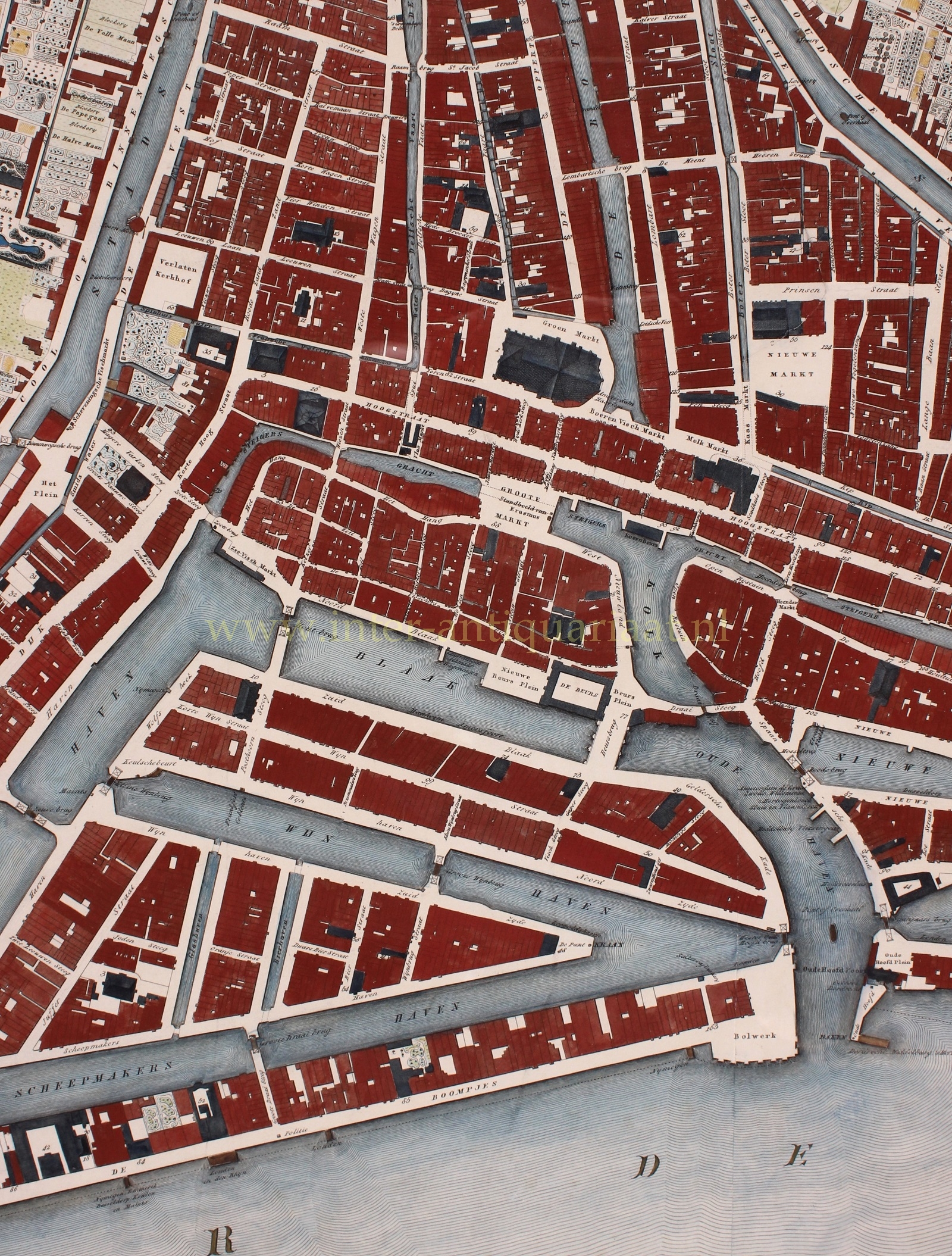
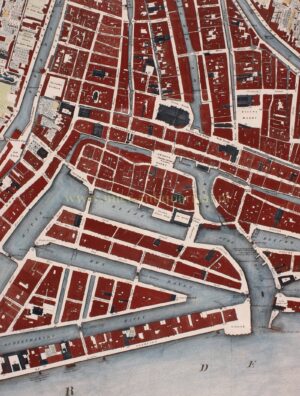
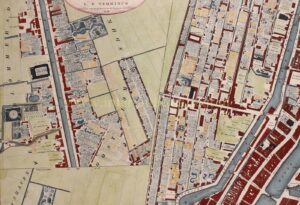
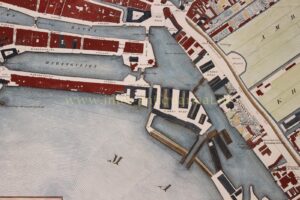
The map depicts Rotterdam in 1839, when the city had still largely retained its historic character. The densely built-up city centre, with its maze of streets and narrow alleys, is intersected by the numerous canals and harbours that had formed the economic heart of Rotterdam for centuries. Along the River Maas are the harbour basins, quays, warehouses and other buildings that testify to the city’s importance as a centre of trade.
Beyond the canals surrounding the old city, the urban landscape changes considerably. Here we see a much more open landscape, with gardens, orchards, country estates and extensive meadows. The carefully depicted gardens, with their winding paths, ponds and geometric designs, lend the map a particularly decorative character.
Since the publication of the previous large-scale city plan, produced by Andries Munro in 1800, Rotterdam’s municipal territory had expanded considerably. The former municipality of Cool had meanwhile been incorporated into Rotterdam, while West- and Oost-Blommersdijk and Rubroek are also shown in considerable detail. To depict the northern extensions of the city along the Rotterdamse Schie without further increasing the size of the map, Temminck included a separate map section on the left-hand side of the sheet.
The need for such an accurate city plan had existed for some time. As early as 1827, Rotterdam’s municipal works supervisors, responsible for the Fabricage (the city’s technical and public works department), urged the Mayor and Aldermen to commission a reliable map showing the boundaries of individual properties. It was not until twelve years later that this request was fulfilled by Leonardus Temminck, an inspector at the cadastral office. He supplied the city authorities with five coloured and five uncoloured copies.
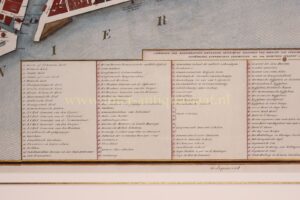
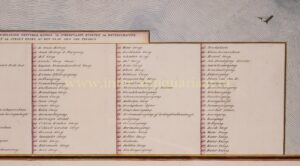
In the densely built-up city centre, the map primarily shows cadastral property boundaries, without always distinguishing between built-up and undeveloped portions of individual plots. Beyond the canals surrounding the old city, land use is depicted in much greater detail. An extensive index along the bottom of the map makes it possible to locate numerous streets, alleys, bridges, public buildings and other important sites.
With its exceptional level of detail and impressive size, this map is not only a remarkable achievement of nineteenth-century cartography but also a valuable historical document. It depicts Rotterdam before the great urban and harbour expansions of the nineteenth century, preserving a record of a cityscape of which large parts would be lost forever through subsequent redevelopment and the bombing of Rotterdam in 1940.
Price: Euro 4.950,- (incl. frame)