

Five Senses – Jan and Andries Both, ca. 1650
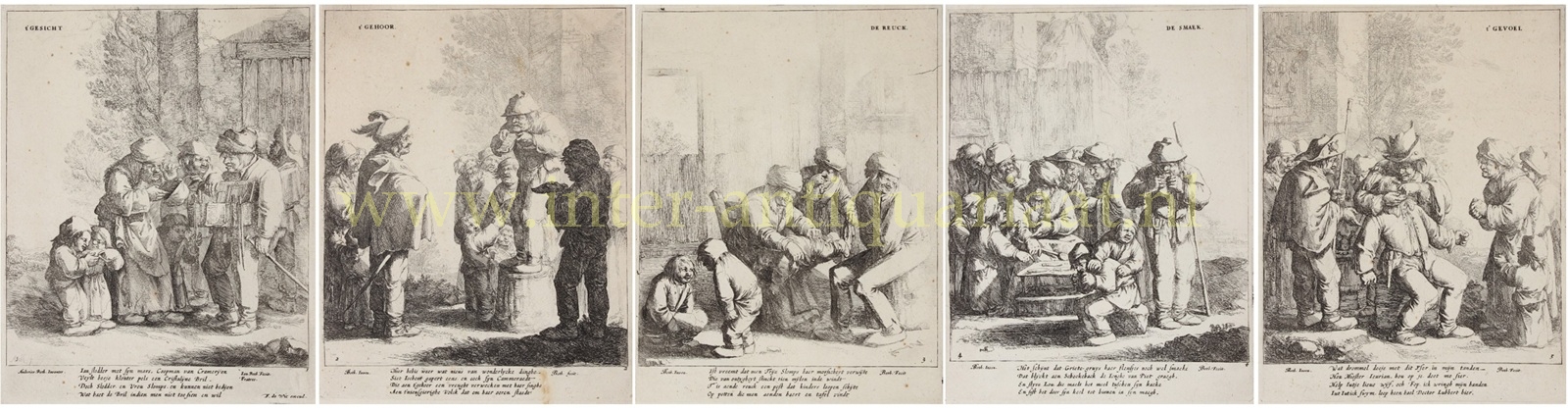
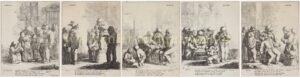
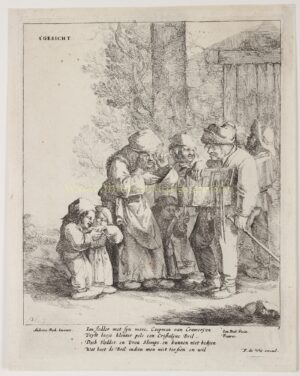
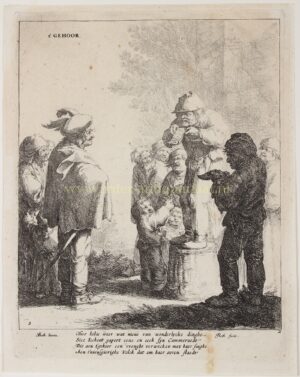
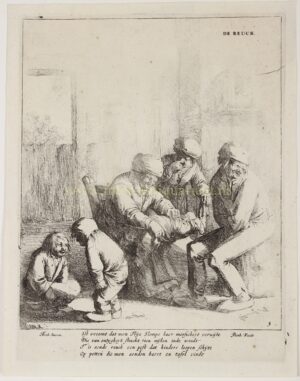
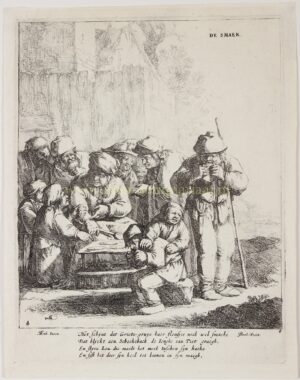
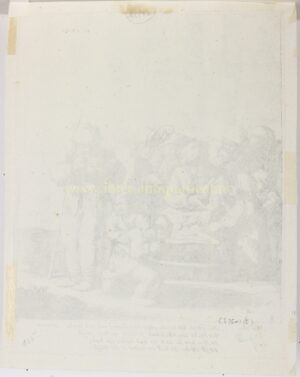
The Five Senses, series of 5 etchings made by Jan Both after designs by Andries Both, published by Frederick de Wit around 1650. 3rd state of 4. Size (each platemark): 22.2 × 17.5 cm.
In this rare series of etchings, the Both brothers depict the classical theme of the Five Senses – sight, hearing, smell, taste, and touch – not in lofty allegorical forms, but in boisterous scenes from everyday life.
Beneath each scene is a Dutch rhyming four-line verse that mocks the sense in question. These humorous texts reinforce the comical character of the images, making them accessible and recognizable to a broad audience. Instead of refined symbolism, the Boths chose a satirical and lively take on the human senses, simultaneously provoking laughter and discomfort in the viewer.
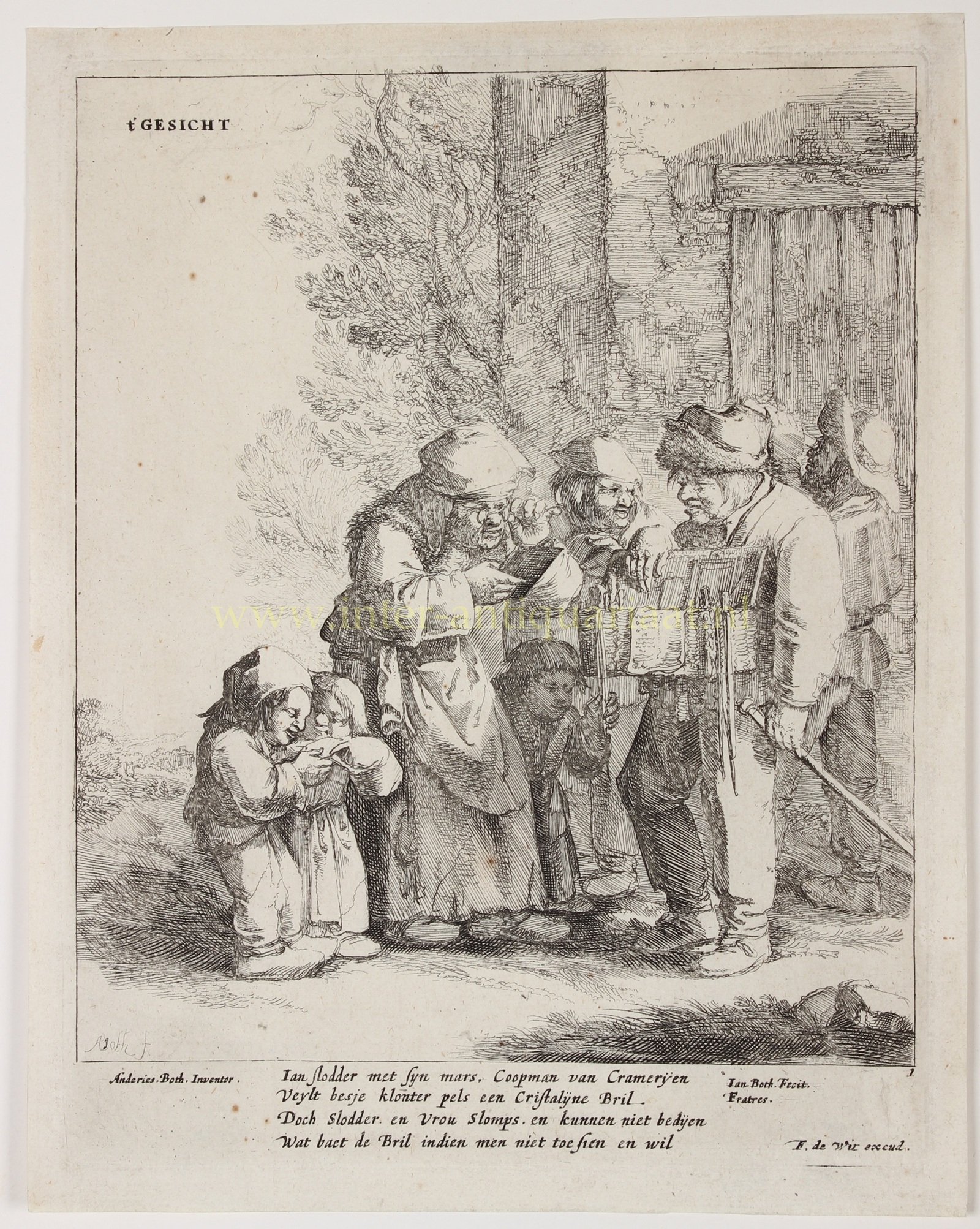
“’t Gesicht” [Sight]
We see a peddler offering various goods from his basket. An old woman tries on a pair of spectacles, while a man peers through a magnifying glass in hopes of improving his vision. On the left, children look together at a print. The scene carries a moralizing undertone: even if aids are available, those who will not truly look—or are unwilling to see—will gain nothing from them.
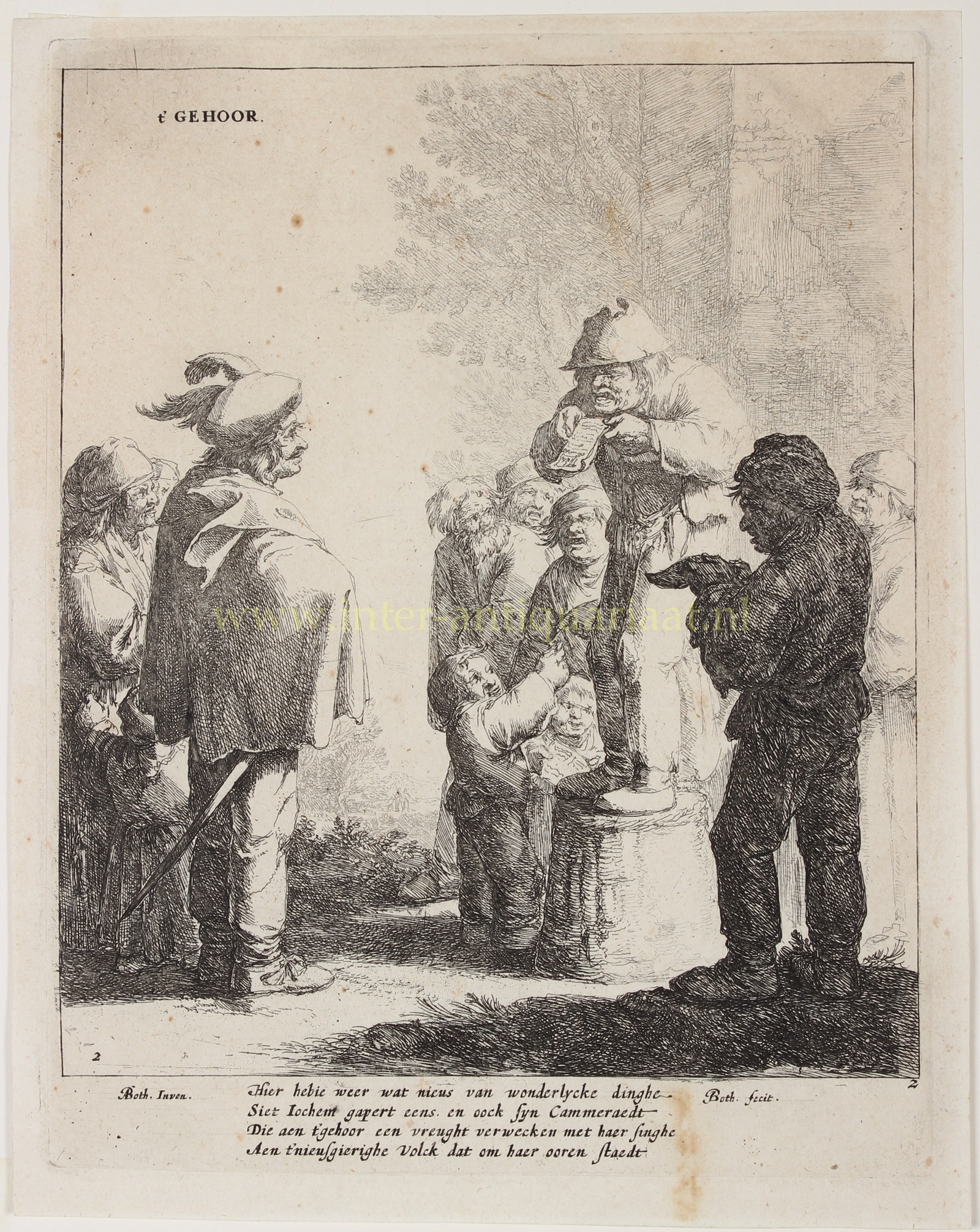
“’t Gehoor” [Hearing]
Standing on a basket, a singer performs his song, accompanied by a comrade joining in. A group of villagers has gathered around them. It is not elevated music; rather, it seems to torment the ears of the listeners.
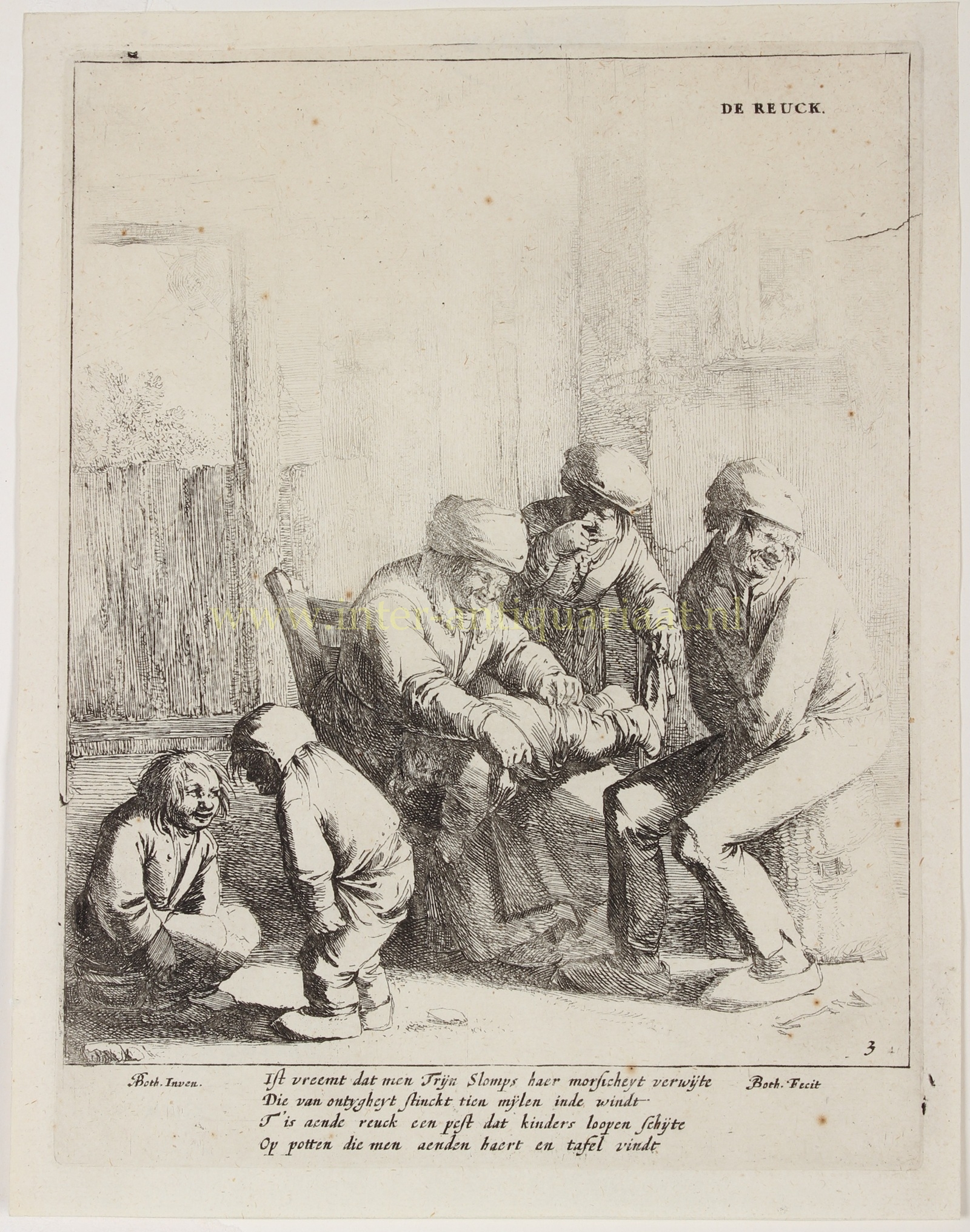
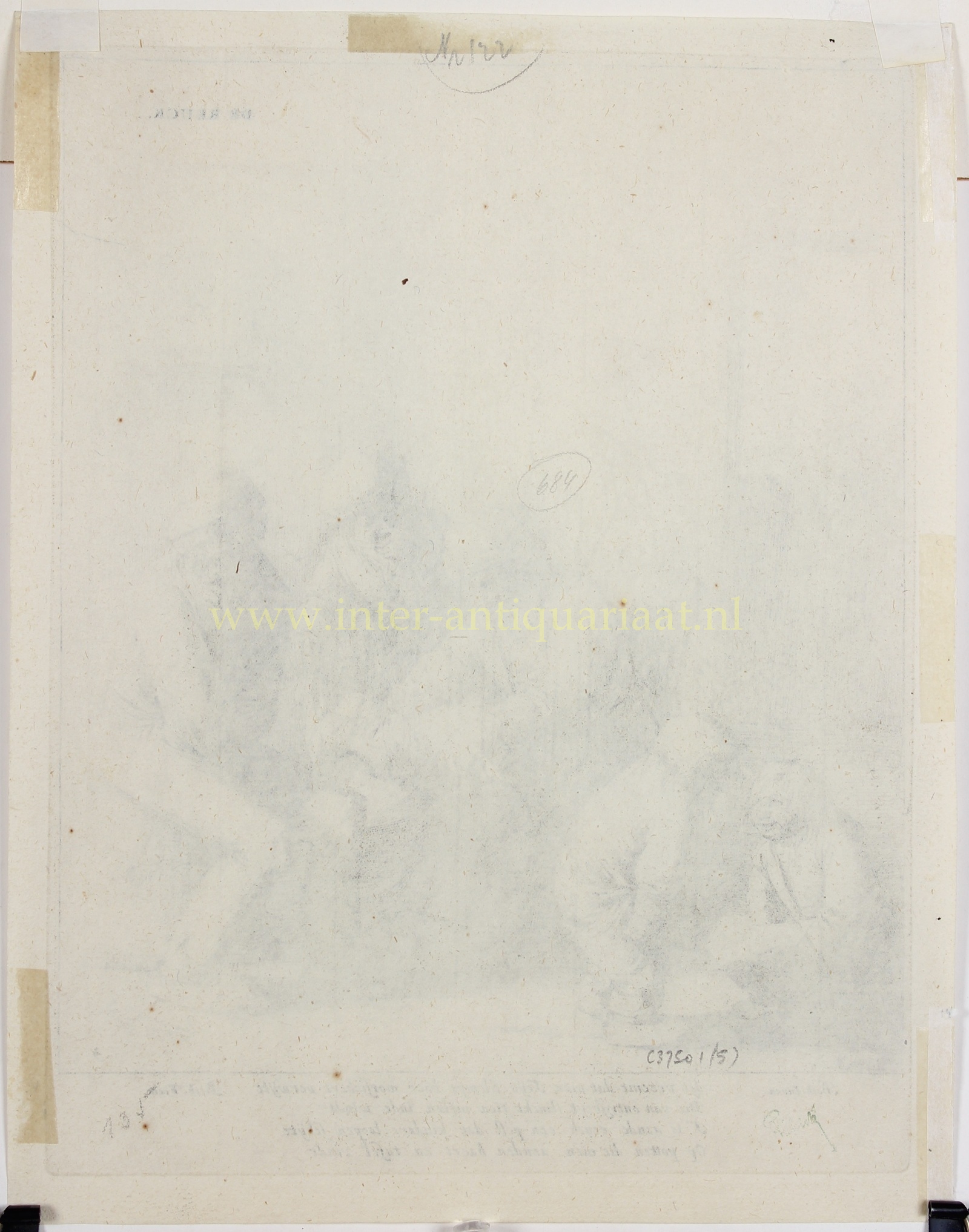
“De Reuck” [Smell]
At left, a child relieves himself in a pot that also serves for cooking. In the center, the slovenly Trijn Slomp changes her child’s soiled trousers. The other adults pinch their noses and grimace in disgust. The stench is said to carry “ten miles downwind.”
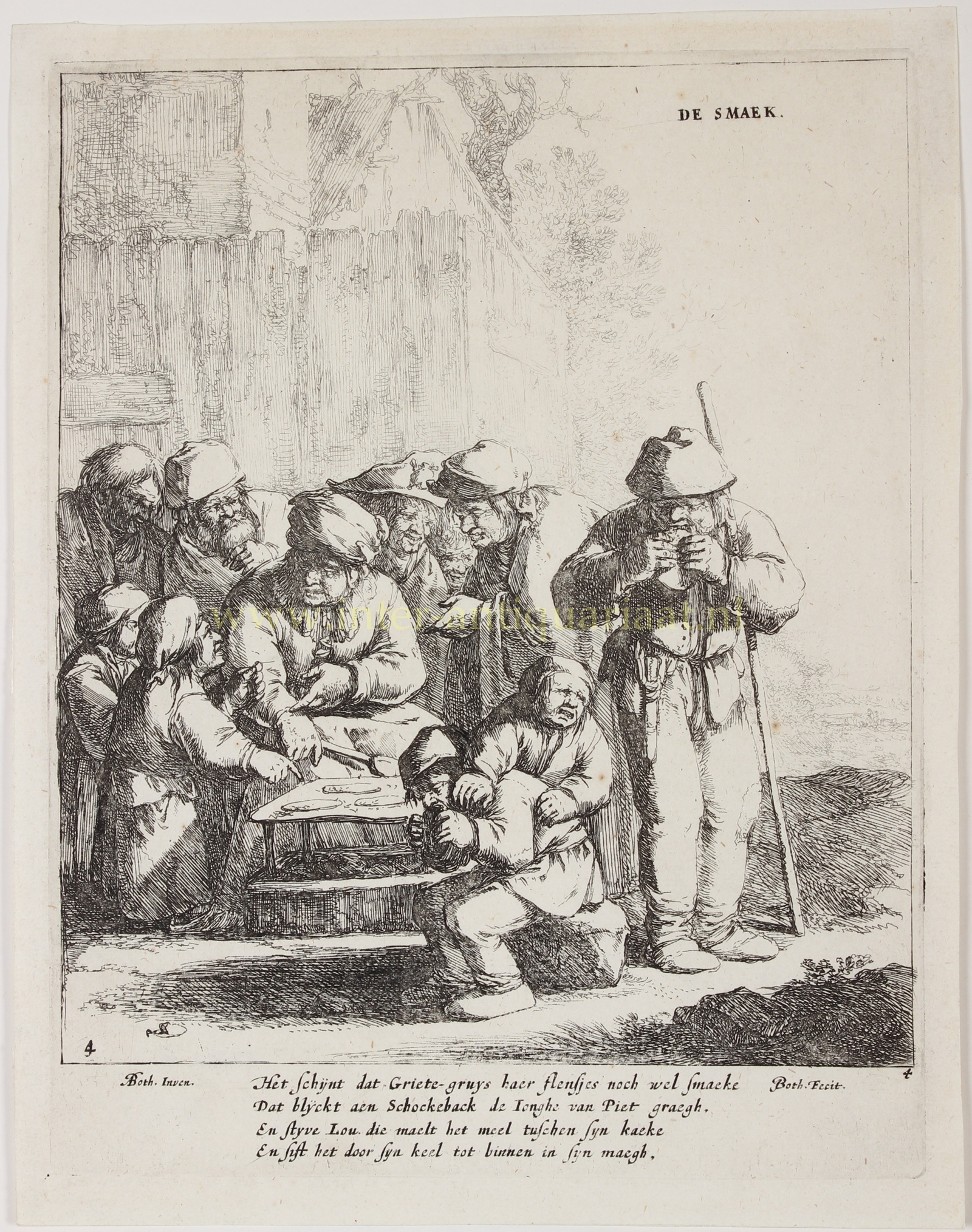
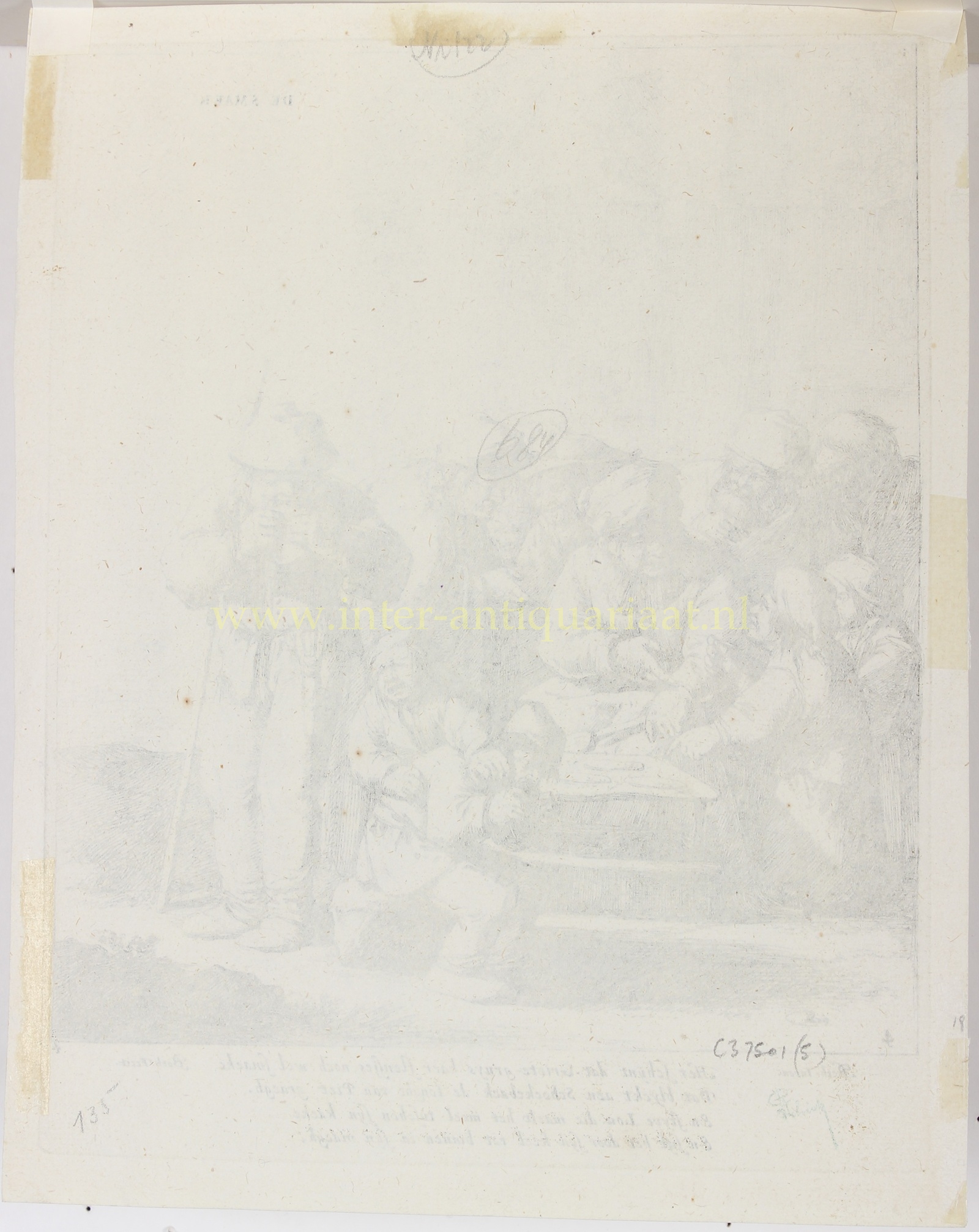
“De Smaeck” [Taste]
A pancake vendor, “Griete-gruys,” fries her cakes. Children and adults crowd around her, greedily grabbing bites. It is a farcical scene full of exaggeration: bulging cheeks, oversized bites, guttural grunts—the bodily pleasure of eating is rendered here in a grotesque and earthy manner.
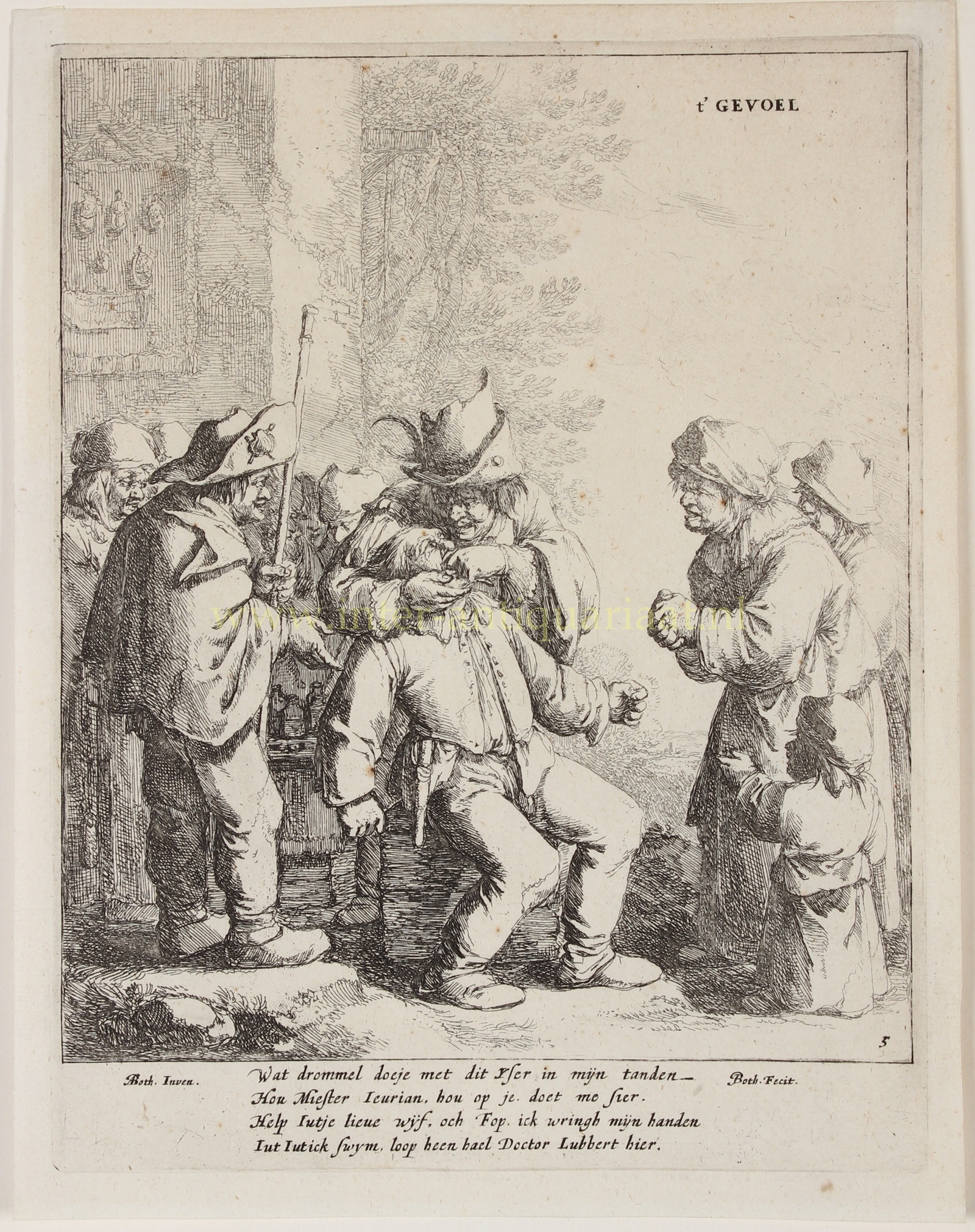
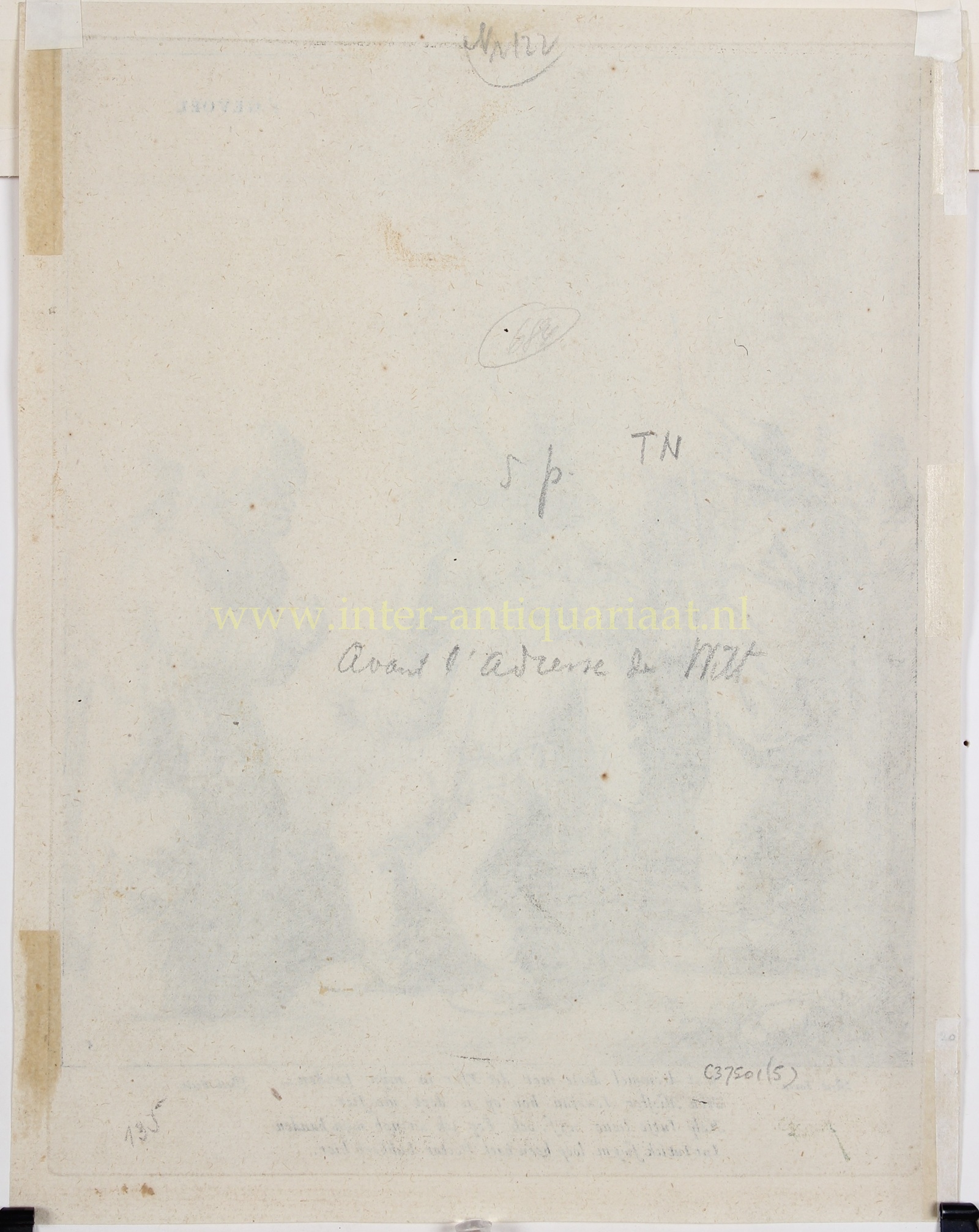
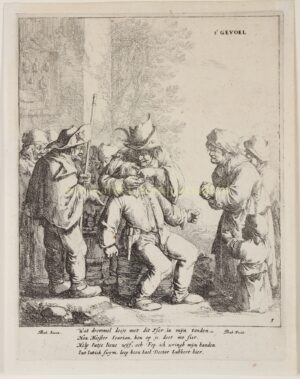
“’t Gevoel” [Touch]
A man sits on a chest, his head thrown back and his arms hanging limply, his face contorted in pain as “Master Leurian” (a traveling tooth-puller or barber-surgeon) works with an iron instrument to extract a tooth.
Onlookers watch tensely. At right, a woman—likely his wife Jutje—wrings her hands in despair, while their child “Fop” looks on. The patient cries out for help, urging someone to fetch “Doctor Lubbert”—a comical detail, as such figures were usually regarded as quacks.
Literature:
- Hollstein “Dutch & Flemish Etchings, Engravings and Woodcuts ca. 1450 – 1700”, J. Both nos. 11-15.
Price: SOLD